
Can you remove hard water spots from car paint easily? Yes, you can! With the right techniques and products, you can effectively tackle those stubborn hard water deposits on your car. This guide will walk you through the best ways to get rid of water stains on your car’s finish, ensuring your vehicle looks its best.
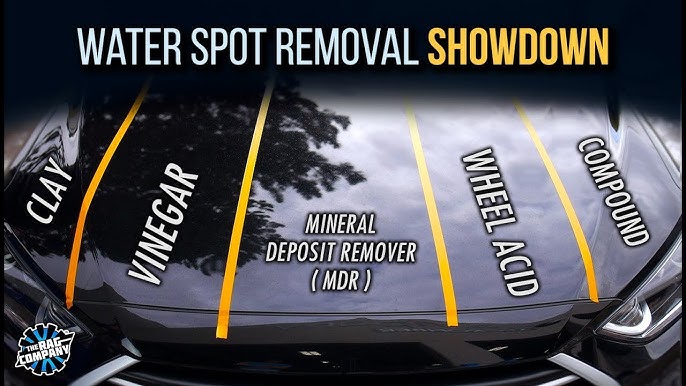
Image Source: i.ytimg.com
The Challenge of Hard Water Spots on Cars
Washing your car is a satisfying chore. You scrub, rinse, and dry, anticipating that pristine, gleaming finish. However, if you’ve ever been disappointed by white, chalky marks that seem to defy your efforts, you’ve likely encountered the culprit: hard water spots. These unsightly blemishes are more than just an aesthetic nuisance; they can be a persistent problem for car owners, especially those living in areas with high mineral content in their water supply.
Hard water is water that contains a high concentration of dissolved minerals, primarily calcium and magnesium. When water evaporates, these minerals are left behind. On your car’s paint, this means mineral deposits build up, creating those telltale white spots. If left unaddressed, these spots can etch into the clear coat, making them harder to remove and potentially causing long-term damage. Fathoming why these spots appear is the first step in tackling them.
Why Do Water Spots Form?
Water spots form when water evaporates from your car’s surface before it’s properly dried. As the water disappears, the minerals dissolved within it remain. These minerals, like calcium and magnesium, are the main culprits behind the white residue you see. The speed at which this happens depends on several factors:
- Water Hardness: The more minerals in the water, the more residue left behind.
- Temperature: Warmer temperatures accelerate evaporation, leading to quicker spot formation.
- Sunlight: Direct sunlight intensifies the evaporation process.
- Surface Contamination: Dirt and grime on your car can help water and minerals cling to the paint.
When you’re washing your car, if you don’t dry it thoroughly and quickly, especially in sunny or warm conditions, these spots are almost guaranteed to appear. This is a common mistake, and it’s crucial to know how to prevent and remove them.
Identifying Different Types of Water Marks
Before diving into removal methods, it’s helpful to recognize the different stages of water marks:
- Fresh Water Spots: These are usually light, powdery marks that haven’t had much time to bond with the paint. They are the easiest to remove.
- Dried Water Spots: These have had time to sit and may have started to bond with the paint surface. They require a bit more effort but are generally still manageable.
- Etched Water Spots: These are the most stubborn. The minerals have begun to chemically react with and damage the clear coat. This often requires more aggressive polishing.
The Best Approach: Prevention is Key
The absolute best way to remove water spots on your car is to prevent them from forming in the first place. Here are some simple yet effective preventative measures:
- Wash in the Shade: Always wash your car in a shaded area or during cooler parts of the day (early morning or late evening). This slows down evaporation.
- Use Plenty of Water: When rinsing, use a steady stream of water to sheet the water off the surface. This helps carry away minerals before they can dry.
- Dry Immediately and Thoroughly: This is the most critical step. Use high-quality microfiber drying towels. Work quickly and use multiple towels if necessary to ensure all surfaces are completely dry. Don’t let water air dry on the paint.
- Use Filtered or Distilled Water: If you have very hard water, consider using filtered or distilled water for the final rinse. This is often done at professional car washes but can be done at home with portable filters or by buying distilled water.
Step-by-Step Guide to Removing Hard Water Spots
When prevention fails or you’ve inherited a car with existing water spots, it’s time for some targeted cleaning. Here’s a comprehensive guide to car paint water stain removal.
Step 1: Assess the Severity
Before you grab any products, take a close look at the water spots. Are they light white marks, or have they started to look etched into the paint? This assessment will guide your choice of cleaning method.
Step 2: Gentle Cleaning for Light Spots
For fresh or light dried water spots, a gentle approach is often all that’s needed.
Method A: The Two-Bucket Wash and Rinse
If the spots are very recent and haven’t bonded strongly, a thorough wash might be enough.
What you’ll need:
- Two buckets (one for soapy water, one for clean rinse water)
- pH-neutral car wash soap
- High-quality microfiber wash mitt
- Microfiber drying towels
Process:
- Fill Buckets: Fill one bucket with car wash soap and water. Fill the second bucket with clean water.
- Wash Section by Section: Start from the top of the car and work your way down. Dip your wash mitt into the soapy water. Wash a small section of the car.
- Rinse the Mitt: Before dipping back into the soapy water, rinse the mitt thoroughly in the clean water bucket. This prevents dirt and grit from being dragged across the paint.
- Final Rinse: Once the entire car is washed, rinse it thoroughly with a hose, letting the water sheet off the surface.
- Dry Immediately: Use clean microfiber towels to dry the car completely.
Method B: Quick Detailer Spray
A good quick detailer can often lift light water spots without needing a full wash.
What you’ll need:
- High-quality quick detailer spray
- Clean microfiber towels (several)
Process:
- Spray and Wipe: Lightly mist the affected area with the quick detailer.
- Wipe Gently: Use a clean microfiber towel to gently wipe the spot. Work in one direction to avoid spreading the minerals.
- Buff: Use a second, dry microfiber towel to buff the area dry and restore shine.
Step 3: Tackling More Stubborn Dried Water Spots
If gentle methods don’t remove the spots, you’ll need to use products specifically designed for car paint water stain removal.
Method C: Using a Clay Bar or Clay Mitt
Clay bars and clay mitts are excellent for removing bonded contaminants, including dried mineral deposits that haven’t yet etched the paint. This is a crucial step in detailing water spots.
What you’ll need:
- Car clay bar or clay mitt
- Clay lubricant spray (often comes with the clay or can be bought separately)
- Microfiber towels
Process:
- Prepare the Surface: Wash and dry the car thoroughly as described above.
- Lubricate: Generously spray the clay lubricant onto the section of the car you’ll be working on. This is essential to prevent the clay from scratching the paint.
- Clay Gently: Take a small piece of the clay bar (or use the clay mitt) and glide it gently over the lubricated surface in straight lines. You should feel the clay grabbing and lifting the contaminants.
- Inspect and Fold: As the clay picks up dirt and minerals, it will become dirty. Fold the clay to expose a clean surface. If using a clay mitt, rinse it frequently in a separate bucket of water.
- Wipe and Dry: After working on a section, wipe away the lubricant residue with a clean microfiber towel and dry the area.
- Repeat: Continue this process section by section across the entire car.
Method D: Specialized Mineral Deposit Remover for Cars
There are specific cleaning products formulated as mineral deposit removers for cars. These often contain mild acids or solvents that help break down the mineral bonds.
What you’ll need:
- Mineral deposit remover for cars (check product reviews and safety for paint)
- Microfiber towels
- Water source for rinsing
Process:
- Read Instructions: Always follow the manufacturer’s instructions carefully.
- Apply Product: Apply the mineral deposit remover to a microfiber towel or directly to the affected area, as instructed.
- Work Gently: Gently rub the spot. Do not scrub aggressively, as this can damage the paint.
- Rinse Thoroughly: Immediately rinse the treated area with plenty of water to remove all traces of the cleaning product.
- Dry: Dry the area thoroughly with a microfiber towel.
Step 4: Dealing with Etched Water Spots
If the water spots have etched into the clear coat, they won’t come off with simple washing or claying. This is where polishing comes into play. This is how to polish water stains off car paint.
Method E: Using a Polish or Compound
A polish or a mild compound can help remove the topmost layer of clear coat where the etching has occurred, revealing a smooth surface.
What you’ll need:
- Automotive polish or compound (start with the least aggressive)
- Applicator pads (foam or microfiber)
- Microfiber towels
- Optional: Dual-action (DA) polisher for easier application and better results
Process:
- Wash and Dry: Ensure the car is clean and dry.
- Choose Your Product: Select a polish or compound. Compounds are more aggressive than polishes. Start with a polish; if that doesn’t work, move to a milder compound.
- Apply to Pad: Apply a small amount of polish or compound to your applicator pad.
- Work in Small Sections: Work on a small area at a time.
- Manual Application: If applying by hand, use moderate pressure and circular or back-and-forth motions.
- Machine Application (Recommended): If using a DA polisher, set it to a low to medium speed. Spread the product over the section, then work it in with overlapping passes, applying light to moderate pressure.
- Wipe Off Residue: Use a clean microfiber towel to wipe away the polish/compound residue.
- Inspect: Check the area. If the spots are gone, move on. If faint marks remain, you may need to repeat the process or use a slightly more aggressive product.
- Protect: After polishing, it’s crucial to protect the paint. Apply a good quality wax or sealant to seal in the shine and protect against future contaminants.
Table: Choosing the Right Polishing Product
| Situation | Recommended Product |
|---|---|
| Very light etching | Fine polishing |
| Moderate etching | Mild compounding |
| Deep etching (still manageable) | Medium compounding |
| Severe etching (paint damage) | Professional help |
Frequently Asked Questions (FAQ)
Q1: Can I use vinegar to remove water spots?
A1: Yes, vinegar can be used as a mild acidic solution to break down mineral deposits. Mix equal parts white vinegar and distilled water. Apply to a microfiber towel, gently wipe the spots, and rinse thoroughly with water. Be sure to work in a shaded area and avoid letting the vinegar solution dry on the paint, as prolonged exposure to acid can damage the clear coat. Always follow up with a wax or sealant.
Q2: How do I remove water spots from window glass?
A2: The same methods for paint can often be used on glass, but you can be slightly more aggressive with compounds if needed. A glass-specific cleaner or even a ceramic coating cleaner can also be effective. For stubborn spots on glass, a 0000 steel wool pad (specifically rated for glass) can be used with glass cleaner, but exercise caution to avoid scratching.
Q3: What is the difference between a polish and a compound?
A3: A compound contains larger abrasive particles than a polish. Compounds are designed to remove more significant paint imperfections like deeper scratches and etching, while polishes are for finer scratch removal and enhancing gloss. Always start with the least aggressive product that will get the job done.
Q4: How often should I wash my car to prevent water spots?
A4: Washing your car weekly or bi-weekly, depending on your driving conditions and environment, is generally recommended. The key is to dry thoroughly after each wash.
Q5: Is it safe to use household cleaners on my car’s paint?
A5: It’s generally not recommended to use household cleaners like dish soap (unless specifically formulated for cars) or bathroom cleaners on your car’s paint. These can strip protective waxes and sealants, and some contain harsh chemicals that can damage the clear coat. Always use products specifically designed for automotive use.
Q6: How to clean water spots off car without washing?
A6: For light spots, a quick detailer spray is your best bet for cleaning water spots off your car without a full wash. Simply spray the affected area and gently wipe with a clean microfiber towel.
Protecting Your Paint After Cleaning
Once you’ve successfully removed the water spots, it’s vital to protect your car’s paint.
Applying Wax or Sealant
After cleaning, especially after polishing, apply a high-quality car wax or paint sealant. This creates a protective barrier that repels water and contaminants, making future cleaning easier and preventing new spots from forming as quickly.
- Wax: Offers a warm, deep shine and good protection for a few weeks to months.
- Sealant: Typically synthetic, offering longer-lasting protection (several months) and a sharper, more modern gloss.
Ceramic Coatings
For the ultimate in protection, consider a ceramic coating. These advanced coatings form a hard, durable, and hydrophobic layer over your paint, making it highly resistant to water spots, chemicals, and UV rays. While a more involved process and investment, ceramic coatings offer superior protection and make maintaining your car significantly easier.
Conclusion: Enjoying a Spotless Shine
Dealing with hard water spots on car paint might seem daunting, but with the right knowledge and tools, it becomes a manageable task. From prevention through proper washing and drying techniques, to targeted removal with specialized products, you can keep your car’s paint looking its best. Remember to always assess the severity of the spots, start with the gentlest method, and protect your paint afterward. Detailing water spots is a key part of car care that pays off in a long-lasting, beautiful finish. By following these steps, you’ll master removing dried water spots from car paint and keep your vehicle gleaming.