
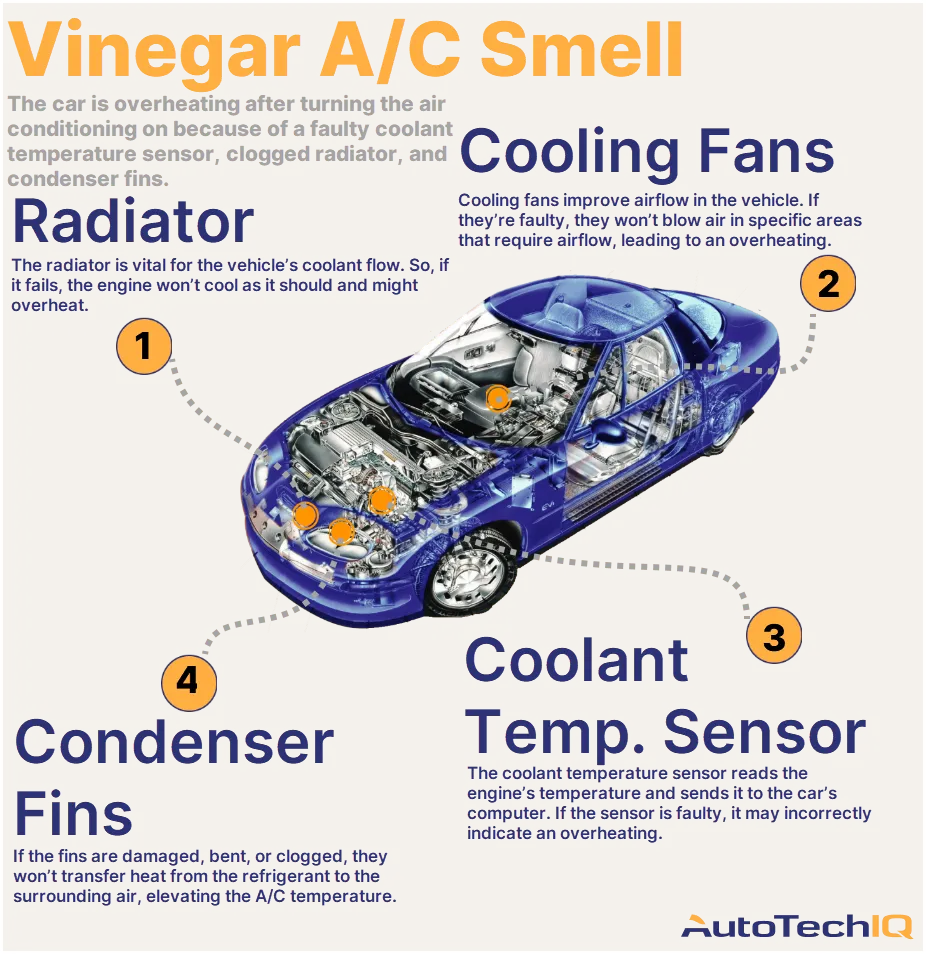
Image Source: www.autotechiq.com
Car Aircon Vinegar Smell: Why Does My Car Aircon Smell Like Vinegar?
Does your car’s air conditioning system emit a distinct vinegar odor when you turn it on? You’re not alone. A car ac smell that resembles vinegar can be quite perplexing and unpleasant. This pervasive vinegar smell car interior is often a sign that something isn’t quite right within your vehicle’s climate control system. The primary reasons for this smell are typically the growth of bacteria and mold within the system, or a leak in the evaporator core, which can sometimes produce a vinegary scent.
Many car owners wonder, “Why does my car air conditioner smell?” and specifically, “Why does my car aircon smell like vinegar?” It’s a common problem, but thankfully, there are identifiable causes and solutions. This in-depth guide will delve into the various factors contributing to this peculiar car air conditioner odor, helping you to diagnose the issue and take steps towards a fresh-smelling cabin once more.
Deciphering the Origins of the Vinegar Odor
The pungent scent of vinegar emanating from your car’s air conditioning isn’t usually due to spilled salad dressing. Instead, it points to biological or chemical processes happening within your AC system. Let’s break down the most common culprits.
The Role of Bacteria and Mold
The most frequent cause of unpleasant odors in car air conditioning systems, including the vinegar smell, is the proliferation of microorganisms like bacteria and mold. The AC system, with its dark, damp interior and circulating air, creates an ideal breeding ground for these unwelcome guests.
How it Happens:
- Moisture Accumulation: After the AC system is used, condensation naturally forms on the evaporator coil. While this moisture is essential for cooling, if it doesn’t drain away properly, it can linger. This stagnant water becomes a perfect environment for bacteria and mold to flourish.
- Airborne Contaminants: The air we breathe, even inside our cars, contains a variety of particles – dust, pollen, dirt, and even microscopic organic matter. These particles can get trapped within the AC system’s components, particularly on the evaporator coil and in the cabin air filter.
- Organic Decomposition: When these organic particles accumulate and are exposed to moisture, they begin to decompose. This decomposition process can produce various byproducts, some of which can have a vinegary or sour smell. Certain types of bacteria, particularly those that feed on organic materials, can produce acetic acid as a metabolic byproduct, which is the primary component of vinegar. This is a key reason why your ac unit smells like vinegar.
Evaporator Core Issues
The evaporator core is a critical component of your car’s AC system. It’s where the refrigerant absorbs heat from the cabin air, thus cooling it. Sometimes, the evaporator core itself can be the source of the vinegar smell.
What Can Go Wrong:
- Leakage: In rare cases, the evaporator core might develop a small leak. If this leak allows coolant or refrigerant to escape and react with other substances in the system, it could potentially produce a vinegary aroma. While less common than biological growth, it’s a possibility that needs to be considered during diagnosis.
- Internal Contamination: Debris or chemicals from the manufacturing process or from previous repairs could potentially cause odors. However, this is usually an issue that appears early in a vehicle’s life.
Cabin Air Filter Problems
Your cabin air filter is designed to trap airborne contaminants before they enter the passenger cabin. When it’s old or clogged, it can contribute to the car air conditioner odor.
How a Bad Filter Contributes:
- Trapped Moisture and Debris: A clogged cabin air filter can hold onto moisture and organic debris. This stagnant, damp material becomes a breeding ground for mold and bacteria, leading to odors that are then circulated through the AC system.
- Reduced Airflow: A dirty filter restricts airflow, which can further exacerbate moisture buildup within the AC system.
Condensation Drain Blockage
For the AC system to function correctly and prevent moisture buildup, there’s a condensation drain tube that allows water to exit the vehicle. If this tube becomes blocked, the water has nowhere to go.
Consequences of a Blocked Drain:
- Water Pooling: Stagnant water will pool inside the AC housing, creating an ideal environment for mold and bacteria to grow. This is a very common cause of a moldy car ac smell, which can often manifest as a vinegar-like odor.
- Increased Humidity: The trapped moisture will also increase the humidity within the AC system, further promoting microbial growth.
Fathoming the Symptoms: More Than Just Vinegar
While the distinct vinegar smell is the primary indicator, other symptoms can accompany it, providing further clues to the problem.
- Musty or Mildew Odors: Alongside the vinegar smell, you might notice general musty or mildewy odors, especially when the AC is first turned on. This reinforces the likelihood of biological growth.
- Reduced Cooling Efficiency: In some cases, severe blockages or component damage related to the odor issue might also affect the AC’s cooling performance.
- Visible Mold or Discoloration: In extreme cases, if you were to inspect certain accessible parts of the AC system, you might see visible signs of mold growth or discoloration.
Diagnosing AC Smells: A Systematic Approach
Diagnosing ac smells requires a methodical approach to pinpoint the exact source. Simply treating the symptom without addressing the cause will only provide temporary relief.
Step 1: Initial Checks and Observations
Before diving into complex AC system diagnostics, perform some basic checks:
- When does the smell occur? Is it only when the AC is on, or does it persist when the fan is running without the AC?
- How strong is the smell? Does it vary in intensity?
- Are there any visible leaks? Check under the car for any unusual puddles.
Step 2: Inspecting the Cabin Air Filter
This is often the easiest component to access and inspect.
- Location: The cabin air filter is typically located behind the glove compartment, under the dashboard, or under the hood near the windshield wipers. Consult your car’s owner’s manual for its exact location.
- Inspection: Remove the filter and examine it for dirt, debris, and any signs of mold or dampness. If it looks dirty or smells musty, it needs to be replaced.
Step 3: Checking the Condensation Drain
A blocked drain can be a major contributor to moisture problems.
- Locating the Drain: The condensation drain tube is usually a small rubber hose extending from the firewall of the vehicle, typically on the passenger side.
- Clearing the Blockage: You can try to clear it using compressed air or a thin, flexible wire. Be gentle to avoid damaging the tube. You can often see water dripping from this tube when the AC has been running for a while; if you don’t, it’s likely blocked.
Step 4: Evaluating the Evaporator Coil
This is a more involved step that may require professional assistance.
- Access: The evaporator coil is located within the dashboard, deep inside the AC system. Accessing it often requires disassembling parts of the dashboard.
- Inspection: If accessible, a visual inspection might reveal signs of mold, debris, or corrosion.
Solutions for the Vinegar Smell: From DIY to Professional Help
Once you have a better idea of the cause, you can implement the appropriate solutions.
DIY Solutions:
- Replace the Cabin Air Filter: This is a crucial first step. A new filter can significantly improve air quality and remove a source of odor.
- AC System Deodorizers and Cleaners: Many products are available specifically for cleaning car AC systems. These are often sprayed into the air intake vents or directly into the system to kill bacteria and mold. Follow the product instructions carefully. Some work by aerosolizing into the cabin with the AC on recirculation, while others are applied directly to the evaporator coil.
Professional Solutions:
- AC System Cleaning (AC Cleaning Service): If DIY methods don’t work, or if you suspect a more significant issue, an ac system cleaning by a qualified mechanic is recommended. They have specialized tools and chemicals to thoroughly clean the entire AC system, including the evaporator coil and ductwork. This is often referred to as an AC sanitization or deep clean.
- Evaporator Core Replacement: If the evaporator core is found to be leaking or severely contaminated, it may need to be replaced. This is a more labor-intensive and costly repair.
- Checking for Refrigerant Leaks: If a leak is suspected as the cause of the vinegar smell, a professional can perform leak detection and repair.
Preventing Future Odors: Maintaining a Fresh-Smelling Car
Prevention is key to avoiding the recurring car ac smell. Implementing a few simple habits can keep your cabin smelling fresh.
Regular Maintenance is Key
- Replace Cabin Air Filter Regularly: Follow your car manufacturer’s recommendations for cabin air filter replacement. Typically, this is every 15,000 to 30,000 miles, or at least once a year.
- Run the Fan Before Shutting Off: Before you turn off your car and AC, run the fan on high for a few minutes with the AC off. This helps to dry out the evaporator coil and prevent moisture from lingering, thereby reducing the chance of mold and bacteria growth.
- Use the Recirculation Mode Wisely: While recirculation can help cool the car faster, using fresh air mode periodically helps to ventilate the system and bring in drier outside air.
Keeping Your Car Interior Clean
- Regular Interior Cleaning: A clean car interior means fewer organic particles can enter and get trapped in your AC system. Vacuum regularly and wipe down surfaces.
- Address Spills Promptly: Any spills, especially sugary drinks, can contribute to odors and provide food for bacteria.
Frequently Asked Questions (FAQ)
Q1: Can I just spray air freshener to cover the vinegar smell?
A1: While air fresheners can temporarily mask the smell, they won’t address the underlying cause. The odor will likely return as the bacteria or mold continue to grow. It’s best to tackle the root problem.
Q2: Is the vinegar smell in my car AC dangerous?
A2: While the smell itself is unpleasant, the bacteria and mold can potentially cause respiratory irritation for some individuals, especially those with allergies or asthma. It’s advisable to get the system cleaned for a healthier environment.
Q3: How much does it cost to get a car AC system cleaned?
A3: The cost can vary depending on your location, the type of vehicle, and the specific service provider. Generally, a professional AC cleaning service can range from $100 to $300. More extensive repairs like evaporator core replacement can be significantly more expensive.
Q4: Can I clean the AC system myself?
A4: You can perform some basic cleaning, such as replacing the cabin air filter and using AC cleaning sprays. However, deep cleaning the evaporator coil and ductwork often requires specialized tools and knowledge, making professional service the most effective option for thorough car interior smell removal.
Q5: Why does my AC smell like vinegar only when it’s hot outside?
A5: The increased humidity and temperature differences during hotter weather can accelerate the growth of bacteria and mold within the AC system, making the vinegar smell more pronounced or noticeable.
Conclusion: Restoring Freshness to Your Drive
A car ac smell that mimics vinegar is a clear signal that your vehicle’s climate control system needs attention. By understanding the common causes – primarily mold and bacterial growth due to moisture buildup, and less commonly, issues with the evaporator core – you can take informed steps towards a solution. From simple DIY fixes like replacing the cabin air filter to professional ac system cleaning, addressing this issue is essential for both comfort and health within your vehicle. Regular maintenance and good interior hygiene are your best defenses against a recurring moldy car ac smell and ensuring a pleasant driving experience. Don’t let that vinegary aroma detract from your time on the road; take action to restore the freshness to your car’s air!