
Does your car stereo sound flat and lifeless, even at full volume? Many drivers want booming bass and crystal-clear sound, but the price tags on high-end car amplifiers can make your wallet weep. It’s a common struggle: you want an upgrade without emptying your savings. Finding an inexpensive car amplifier that actually performs well feels like searching for a needle in a haystack.
You worry about buying a cheap amp that buzzes, distorts the music, or simply dies after a few months. The market is flooded with confusing specs and questionable brands, making the “budget-friendly” choice feel risky. Don’t let a tight budget stop you from enjoying great audio!
This guide cuts through the confusion. We will show you exactly how to find powerful, reliable, and affordable car amplifiers. Keep reading to discover the best budget-friendly options that deliver amazing sound quality without the premium cost. Let’s turn your noisy commute into a concert hall!
Top Inexpensive Car Amplifier Recommendations


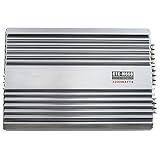


Your Guide to Buying an Affordable Car Amplifier
Want better sound in your car without emptying your wallet? An inexpensive car amplifier can make a huge difference! This guide helps you pick the best budget-friendly option.
Key Features to Look For
When shopping for a cheap amp, certain features matter most. These tell you how much power the amp delivers and how you can use it.
Power Output (RMS vs. Peak)
- RMS Power (Root Mean Square): This is the real power the amp provides consistently. Always check the RMS rating. Higher RMS means louder, clearer sound without distortion.
- Peak Power: This is the maximum power the amp can handle for a very short time. Ignore this number mostly; focus on RMS.
Channels
Channels decide how many speakers the amp can power.
- 2-Channel: Good for powering two main speakers or one subwoofer.
- 4-Channel: The most versatile choice. It usually powers four speakers (front and rear).
- Mono (1-Channel): Best if you only plan to power one subwoofer.
Impedance Matching (Ohms)
Impedance is the electrical resistance. You must match the amp’s stability rating (usually 2 or 4 ohms) to your speakers. Mismatching can cause the amp to overheat.
Important Materials and Build Quality
Even budget amps use materials that affect performance and lifespan.
Heat Sinks
The heat sink draws heat away from the internal parts. Look for aluminum heat sinks. Aluminum cools better than plastic housings. A larger, finned heat sink usually means better heat management.
Internal Components
Better internal components provide cleaner sound.
- MOSFET Power Supply: Most modern amps use MOSFETs. They are efficient and help keep the size small, which is great for tight car spaces.
Factors That Improve or Reduce Quality
What makes a cheap amp sound good, and what makes it sound bad?
Quality Factors (Sound Improvement)
- Good Signal-to-Noise Ratio (SNR): A higher SNR (like 90dB or more) means less background hiss when music plays loudly. This is important for clean audio.
- Built-in Crossovers: These let you filter frequencies. High-pass filters protect your small speakers from deep bass, and low-pass filters protect your subwoofer from high notes.
Quality Reducers (Things to Avoid)
- Overstated Power Ratings: Many cheap brands lie about their RMS power. Read independent reviews to find the real numbers.
- Poor Wiring Terminals: Cheap, flimsy screw terminals can loosen over time, causing connection issues and static.
User Experience and Use Cases
How you plan to use the amp changes what you should buy.
Use Case 1: Boosting Factory Speakers
If you just want your existing speakers to sound louder and clearer, a small 4-channel amp (around 50W RMS per channel) is perfect. You need enough clean power to overcome the weak factory radio.
Use Case 2: Adding a Subwoofer
If bass is your goal, look for a dedicated mono amplifier. Ensure its RMS rating matches the subwoofer you plan to buy. These amps usually need a strong, dedicated power wire.
Installation Simplicity
Budget amps are often smaller, making them easier to hide under seats or in the dashboard. Make sure the controls (gains and crossovers) are easy to reach for initial tuning.
10 FAQs About Inexpensive Car Amplifiers
Q: How much power do I really need?
A: For just improving your standard car speakers, 40 to 60 watts RMS per channel is usually enough. If you add a subwoofer, you need more power for that single channel.
Q: Can I use a cheap amp with a stock (factory) radio?
A: Yes, you can. You need an amplifier that accepts “high-level inputs.” This means the amp can take the speaker wire signal directly from your factory radio, instead of needing special RCA cables.
Q: Will a cheap amp drain my car battery?
A: Any amp draws power. If you buy an amp that is too powerful for your needs, it strains the system. Stick to RMS ratings that match your speakers, and ensure the wiring gauge (thickness) is correct.
Q: What is “clipping,” and why is it bad?
A: Clipping happens when you turn the amp’s gain too high. The amp starts sending a square, distorted signal instead of a smooth sound wave. This distortion quickly burns out your speakers.
Q: Do I need to upgrade my car’s wiring?
A: For small, low-power budget amps (under 300W total power), you might get away with using slightly thinner wires. However, for any serious power increase, always use the wiring kit recommended for the amplifier’s maximum RMS output.
Q: What is the “Gain” knob for?
A: The Gain knob is NOT a volume control. It sets the amplifier’s sensitivity so it matches the voltage coming from your stereo. Set it correctly to prevent clipping.
Q: Are 5-channel amps available cheaply?
A: Yes, 5-channel amps are becoming common in budget lines. They are great because they power four speakers plus a small subwoofer all from one unit.
Q: How do I protect my new amp?
A: Always install a fuse between the battery and the amplifier, close to the battery terminal. This protects your car from fire if the amplifier shorts out.
Q: Should I buy a used amp instead of a new cheap one?
A: Buying used is risky. You cannot check the internal condition. A new, budget-friendly amp usually comes with a warranty, offering better peace of mind.
Q: What is the main trade-off when buying inexpensive amps?
A: The main trade-off is usually component quality and true power output. You get less clean power and potentially shorter lifespan compared to premium models, but the sound upgrade is still massive compared to stock audio.