
Ever cranked up your favorite song only to feel like something crucial is missing? That deep, chest-thumping bass is often the soul of your music, and when it’s weak, the whole experience falls flat. For many car audio enthusiasts and home theater lovers, the 12-inch subwoofer is the magic ingredient that solves this problem.
But diving into the world of 12-inch subs can feel overwhelming. Should you choose a single voice coil or dual? High power handling or efficiency? Choosing the wrong one means wasted money and, worse, disappointing sound. You want that perfect rumble without blowing out your speakers or your budget. It’s a balancing act between power, size, and sound quality.
This guide cuts through the confusing jargon. We break down exactly what makes a great 12-inch subwoofer and show you how to match the perfect unit to your specific needs and vehicle. By the end of this post, you will know exactly what features matter most.
Ready to transform your listening experience from flat to phenomenal? Let’s explore the best 12-inch subwoofers available today and find the one that brings your music to life.
Top 12 Inch Subwoofers Recommendations
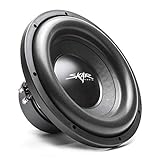
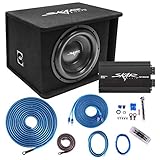


The Ultimate Buying Guide for 12-Inch Subwoofers
A 12-inch subwoofer is a fantastic choice for anyone wanting deeper, richer bass in their car or home audio setup. These speakers move a lot of air. This means you get that satisfying “thump” you feel in your chest. Choosing the right one can be tricky. This guide helps you pick the best subwoofer for your needs.
Key Features to Look For
When shopping for a 12-inch sub, several features really matter. These details tell you how well the speaker will perform.
Power Handling (RMS vs. Peak)
- RMS Power: This is the most important number. It tells you how much continuous power the subwoofer can handle safely. Higher RMS usually means louder, cleaner bass.
- Peak Power: This is the maximum power the sub can handle for very short bursts. Don’t rely on this number too much.
Sensitivity Rating
Sensitivity measures how loud a speaker plays with a given amount of power. A sub with a higher sensitivity (like 90 dB or more) will play louder when you give it less amplifier power. This is good if you have a smaller amp.
Impedance (Ohms)
Impedance is the electrical resistance. Most 12-inch subs come in 2-ohm or 4-ohm versions. You must match the subwoofer’s impedance to what your amplifier is designed to run. Mismatched impedance can damage your amp or reduce performance.
Important Materials Matter
The parts used to build the subwoofer greatly affect its sound quality and how long it lasts.
Cone Material
The cone moves air to create sound waves. Good materials are strong but light.
- Polypropylene: This is common and durable. It handles moisture well, making it great for car audio.
- Paper/Pulp: Often used for musical accuracy. High-quality treated paper cones sound excellent.
- Kevlar or Carbon Fiber: These are very stiff and light. They produce very clear, fast bass notes.
Surround Material
The surround is the flexible ring connecting the cone to the basket. It allows the cone to move in and out.
- Rubber: The most common choice. It lasts a long time and handles temperature changes well.
- Foam: Lighter than rubber, which can increase sensitivity, but foam breaks down faster over time, especially in the sun.
Factors That Improve or Reduce Quality
Good design makes a big difference in bass quality.
Voice Coil Design
The voice coil is the motor of the subwoofer. A dual voice coil (DVC) design gives you more wiring options for your amplifier. Single voice coil (SVC) is simpler. DVC often offers more flexibility for advanced setups.
Mounting Depth and Enclosure Type
You must make sure the sub fits in your chosen space. Measure the mounting depth carefully. Also, the type of box (enclosure) you use changes the sound.
- Sealed Enclosures: Provide tight, accurate bass. They usually need more power.
- Ported/Vented Enclosures: Produce louder, deeper bass notes, but the sound might not be as precise.
Poor quality construction, like weak baskets (the frame holding the speaker) or cheap wiring, reduces performance quickly.
User Experience and Use Cases
Think about where you will use your new 12-inch sub.
Car Audio (Mobile Use)
In a car, space is limited. You need a sub that works well in a smaller trunk enclosure. If you listen to hip-hop or electronic music that needs very low notes, look for subs with high Xmax (the distance the cone can move). If you just want better overall music quality, a mid-range RMS sub is fine.
Home Theater Use
For home use, you usually have more space for larger enclosures. Home theater subs often focus on extremely low frequencies (below 30Hz). They need to be powerful but quiet (low distortion) when playing quietly.
10 Frequently Asked Questions (FAQ) About 12-Inch Subwoofers
Q: What is the best RMS power for a 12-inch subwoofer?
A: For good performance, look for an RMS rating between 300 to 600 watts. This gives you plenty of clean volume for most cars or small rooms.
Q: Do I need a special amplifier for a 12-inch sub?
A: Yes. You need a dedicated monoblock (single channel) amplifier. The amp’s RMS power rating should closely match the subwoofer’s RMS rating for the best sound and safety.
Q: Is a 12-inch sub better than a 10-inch sub?
A: Generally, a 12-inch sub moves more air. This means it usually plays deeper bass notes (lower frequencies) than a 10-inch sub. Tens are often quicker and fit in smaller spaces.
Q: What impedance (Ohms) should I choose?
A: Choose the impedance that lets your amplifier run most efficiently. Most amps prefer a 2-ohm or 4-ohm load. Always check your amplifier’s manual first.
Q: What does “Xmax” mean?
A: Xmax measures how far the speaker cone can travel forward or backward. Higher Xmax means the sub can push more air, resulting in louder, deeper bass without distortion.
Q: Can I run a dual voice coil (DVC) sub with a single voice coil (SVC) amp?
A: Yes, you can often wire a DVC sub to present a single 4-ohm or 2-ohm load to an SVC amplifier. Wiring options depend on the specific coils.
Q: How does the enclosure affect the bass sound?
A: A sealed box gives tight, accurate bass. A ported box makes the bass louder and deeper but can sound slightly looser or “boomy.”
Q: Do I need to break in a new subwoofer?
A: Yes, a short break-in period helps. Play music at moderate volume for about 10 to 20 hours. This loosens up the spider and surround materials.
Q: What is the most common size for a subwoofer box?
A: For a 12-inch sub, the enclosure volume changes based on the manufacturer’s recommendation. Usually, sealed boxes are around 1.0 to 1.5 cubic feet, while ported boxes are larger, around 1.5 to 2.5 cubic feet.
Q: Will a 12-inch sub sound good with just factory speakers?
A: It will sound much better! A subwoofer handles the low bass frequencies. This lets your small factory speakers focus only on the mids and highs, making the whole system sound clearer and louder.