
Yes, it is possible to fit three car seats across the back seat of most cars, but it often requires careful planning and the right equipment. This guide will help you navigate the challenges and find the best solutions for your family’s rear-seat car capacity.
As families grow, so does the need for safe and practical transportation. The desire to squeeze three car seats into a standard back seat can feel like an impossible puzzle. However, with the right knowledge and the selection of narrow car seats or three across car seats, this challenge can be overcome. This comprehensive guide will walk you through everything you need to know to successfully fit three car seats in your vehicle, ensuring safety and comfort for all your little passengers.
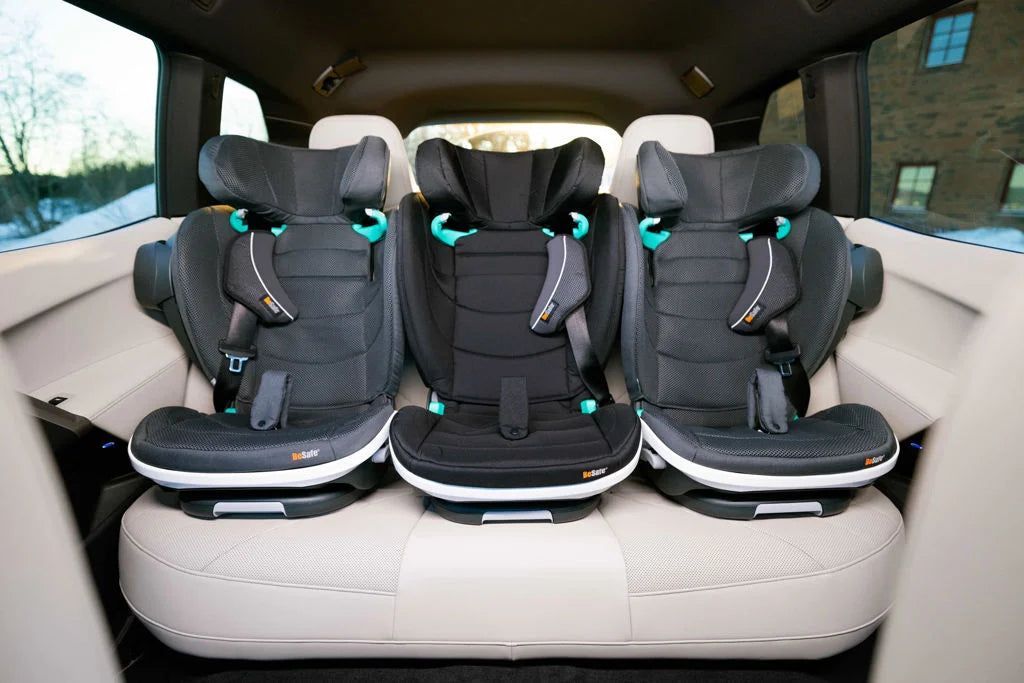
Image Source: incarsafetycentre.co.uk
Deciphering Vehicle Seat Spacing
Before you even start looking at car seats, it’s crucial to understand your car’s back seat. Vehicle seat spacing varies greatly between makes and models. Some cars have wider back seats, deeper seats, or more flexible LATCH anchor systems, making it easier to fit multiple car seats. Others have narrower bench seats or less space between the seat belt buckles.
Measuring Your Back Seat
The first step is to get out a tape measure. Here’s what you need to measure:
- Width of the back seat: Measure from the inside of the door panel on one side to the inside of the door panel on the other.
- Distance between seat belt buckles: This is particularly important for the center seat. Measure from the center of one buckle to the center of the other.
- Seat belt buckle height and position: Some buckles are on stalks, while others are more integrated into the seat. This can affect how easily a car seat can buckle in, especially if the seats are close together.
- LATCH anchor positions: Note where your car’s LATCH anchors are located. Some vehicles have them in all three rear seating positions, while others may only have them in the outboard seats.
Factors Affecting Fit
Several factors can influence how well car seats fit:
- Seat belt versus LATCH installation: While LATCH systems are convenient, they often have weight limits. Once a child reaches a certain weight (including the weight of the car seat itself), you’ll need to switch to using the seat belt for installation. Seat belt installations can sometimes offer more flexibility in positioning.
- Car seat types: The car seat width is a primary concern. Different types of car seats have different dimensions. Infant car seats with carriers tend to be narrower than convertible or all-in-one seats. Booster seats, especially backless ones, are often the slimmest option.
- Buckle interference: This is a common problem. When seats are placed next to each other, the buckles can push against each other, making it difficult or impossible to buckle the seat belts securely.
- Headrests: Fixed headrests can limit how far back a car seat can tilt, especially in a rear-facing position. If the headrest is removable, this can sometimes improve the fit.
Choosing the Right Car Seats
The key to fitting three car seats in a row is selecting narrow car seats or three across car seats specifically designed for this purpose. Not all car seats are created equal when it comes to their footprint.
Types of Narrow Car Seats
Manufacturers are increasingly recognizing the need for slimmer car seats. Look for seats that advertise their narrow profile. These are often:
- Convertible car seats: Many modern convertible seats are designed with narrower bases to accommodate multiple children.
- Infant car seats with carriers: The infant carriers themselves are generally slimmer, but the bases can take up space.
- Combination seats (Harnessed Booster): These seats transition from a five-point harness to a seat belt positioner and are often designed to be more compact.
- Backless booster seats: These are typically the slimmest option and are ideal for older children who no longer need a harness.
What to Look for When Shopping
When you’re in the store or browsing online, pay close attention to the dimensions:
- Car Seat Width: This is the most critical measurement. Compare the widths of different seats. A few inches can make a significant difference.
- Installation Mechanism: Some car seats have a slimmer profile when it comes to their base or how the seat belt/LATCH straps are routed, which can help with fitting them side-by-side.
- Ease of Buckling: Even if a seat fits physically, ensure you can easily access and buckle the seat belts or LATCH connectors.
- Adjustability: Seats with adjustable headrests and harness heights can make it easier to find the right position for each child and accommodate different seating arrangements.
Brands Known for Narrow Car Seats
While it’s always best to check specific models, some brands are generally known for offering narrower options that are popular for three across car seats setups. Researching these brands and their latest models can be a good starting point:
- Chicco: Often has slimmer designs in their KeyFit and Fit4Life lines.
- Clek: Known for their compact and stylish seats like the Fllo and Foonf, which are often cited for their narrow profiles.
- Graco: Offers a range of convertible seats, some of which are designed to be more streamlined.
- Britax: Has several models that can work well in multi-car seat configurations.
- Evenflo: Frequently features narrower options in their Gold series and other lines.
Strategies for Arranging Three Car Seats
Once you have your car seats, the real puzzle begins: figuring out the best car seat configurations. There’s no one-size-fits-all answer, and sometimes you’ll need to try different combinations.
The “Center” Debate
Installing a car seat in the center position is often ideal because it’s generally the safest spot in the car, furthest from side impacts. However, there are considerations:
- Seat Belt Access: Not all cars have a seat belt that can reach the center position, or the buckle might be too wide or oddly shaped.
- LATCH Anchor Availability: Many cars only have LATCH anchors in the outboard seating positions.
- Buckle Interference: The buckles for the outboard seats can sometimes get in the way of buckling the center seat.
If you can install a car seat securely in the center using the seat belt, it often frees up more space on the sides.
Common Three-Across Arrangements
- Three Across the Back: This is the most straightforward approach. You’ll typically place the narrowest seats on the outside and potentially a slightly wider one in the middle, or try to fit three identical narrow seats.
- Two in the Back, One in the Front (Passenger Seat): This is generally not recommended due to safety concerns, especially for rear-facing children. A forward-facing child in the front might be an option in some specific situations, but the back seat is always preferred for children. If you have an infant car seat and a vehicle with a switchable passenger airbag, a rear-facing infant seat might be placed in the front, but this is a last resort and requires extreme caution and confirmation from your vehicle manual.
- Using Different Seat Types: A common strategy is to use a convertible seat on one side, another convertible seat or infant carrier on the other, and a booster seat in the middle or on an end. Backless boosters are excellent for saving space.
The “In-a-Row” Fit Technique
Here’s a practical approach to fitting them in:
- Start with the Outboard Seats: Install your two outermost car seats first. This often leaves the most room in the center. Try to position them as close to the doors as possible without interfering with the seat belts or LATCH anchors.
- Focus on the Center: Now, try to fit the third car seat in the center. You may need to adjust the outboard seats slightly.
- Check Buckle Clearance: Ensure that the seat belt buckles for the outer seats are not obstructed by the car seats next to them. You might need to use buckle boosters or position the seats differently to allow for easy buckling.
- Consider Harness Straps: Make sure the harness straps can be routed correctly and securely, especially if the car seats are very close.
- Test for Tightness: Once installed, give each car seat a firm shake at the base. It should not move more than one inch side-to-side or front-to-back at the belt path.
Car Seat Installation: Ensuring Safety
Proper car seat installation is paramount, regardless of whether you have one or three seats. When fitting multiple seats, the challenge is to ensure each one is installed correctly and securely.
Key Installation Principles
- Consult Your Manuals: Always refer to both your car owner’s manual and your car seat manuals. They contain specific instructions and limitations.
- Tightness Test: As mentioned, the car seat should not move more than one inch in any direction at the belt path.
- Correct Belt Path: Ensure you are using the correct belt path for the child’s age and stage (rear-facing, forward-facing, or booster).
- Angle (Rear-Facing): For rear-facing seats, ensure the recline angle is correct for the child’s age and weight, typically indicated by a level indicator on the seat.
- Locking Clip/Seat Belt Locking: If using the seat belt, ensure it is locked correctly. This might involve using the car seat’s built-in lock-off, using the vehicle’s locking clip, or engaging the vehicle’s built-in seat belt locking feature (often by pulling the shoulder belt all the way out).
LATCH vs. Seat Belt Installation
- LATCH System: The Lower Anchors and Tethers for Children (LATCH) system uses lower anchor points and a top tether. It’s often easier to get a tight fit. However, LATCH systems have weight limits. Once the child’s weight plus the car seat’s weight exceeds the limit (usually around 65 lbs, but check your manuals), you must switch to seat belt installation.
- Seat Belt Installation: This method uses the vehicle’s seat belt to secure the car seat. It’s a reliable method and doesn’t have the same weight limitations as LATCH. However, it can sometimes be trickier to get a truly tight fit, especially with multiple seats.
Maximizing Space and Comfort
Fitting three car seats often involves some clever maneuvering and potentially sacrificing a little bit of adult comfort.
Booster Seats for Space Saving
For older children, booster seats are often the most effective way to create space.
- Backless Boosters: These are significantly slimmer than high-back boosters and don’t have a rigid back to interfere with other seats. They are ideal for fitting three across.
- Combination Boosters: These seats start as harnessed seats and convert to boosters. Their narrower designs can be very beneficial.
Seat Protectors and Organizers
While not directly related to fitting the seats, using slim seat protectors can prevent damage to your vehicle’s upholstery. Avoid bulky organizers that might get in the way of secure car seat installation.
Adjusting Vehicle Seats
In some vehicles, you might be able to adjust the angle of the rear seats or fold down one of the side seat portions to gain access to LATCH anchors or make installation easier.
When to Seek Professional Help
If you’ve tried everything and still can’t get a secure fit, or if you’re unsure about the installation, don’t hesitate to seek help.
Certified Child Passenger Safety Technicians (CPSTs)
Find a local CPST. They are trained to help you choose the right car seats for your vehicle and children, and to ensure correct installation. Many fire stations, police departments, and hospitals offer free car seat checks.
Frequently Asked Questions (FAQ)
Q1: Can I put a car seat in the front seat?
A1: It is strongly recommended to keep all children under 13 in the back seat. For rear-facing car seats, the front passenger seat is never a safe option due to the airbag. For forward-facing car seats, it’s still best practice to avoid the front seat unless absolutely necessary and your vehicle manual allows it, with the airbag turned off.
Q2: What is the safest spot for a car seat?
A2: The center of the back seat is generally considered the safest spot, as it is furthest from potential side impacts. However, safety also depends on a secure installation. If you cannot achieve a secure installation in the center but can in an outboard position, the outboard position with a correct installation is safer.
Q3: How do I know if my car seat is installed correctly?
A3: A properly installed car seat should not move more than one inch in any direction at the belt path when you give it a firm shake. Always refer to your car seat and vehicle manuals for specific installation instructions.
Q4: What is the weight limit for LATCH?
A4: The weight limit for LATCH systems varies by car seat manufacturer and vehicle manufacturer, but typically it’s around 65 pounds of child and car seat combined. Once this limit is reached, you must use the vehicle’s seat belt for installation. Always check your manuals for exact limits.
Q5: Are there specific brands that make “three across” car seats?
A5: While no car seat is exclusively labeled as a “three across” seat, several brands offer narrower models that are popular for fitting three side-by-side. Brands like Clek, Chicco, Graco, and Britax often have options that work well in these situations. It’s essential to check the specific dimensions of each model.
Q6: What if the seat belt buckles are too wide or too close together?
A6: This is a common issue. Sometimes, using a different type of car seat or a different configuration can help. Backless booster seats often have more flexible belt guides. For convertible seats, you might need to try seats with different buckle designs or positions. In some cases, buckle boosters (which are not always permitted by all car seat manufacturers) or aftermarket solutions might be considered, but always check car seat manufacturer guidelines first.
Q7: Do I need to buy all new car seats?
A7: Not necessarily. You might be able to make your current car seats work by rearranging them or by adding one or two narrower options, like a backless booster, to your existing lineup. Prioritize getting the right fit and secure installation for all your children.
Q8: Can I use a car seat organizer between car seats?
A8: Generally, you should avoid placing any objects or accessories between car seats or between the car seat and the vehicle seat. These items can interfere with the proper installation and safety of the car seat. Always consult your car seat manual regarding accessories.
By carefully measuring your vehicle, selecting narrow car seats, and employing smart car seat configurations, you can successfully achieve the goal of fitting three car seats in your car, ensuring your family travels safely and comfortably. Remember that patience and thorough research are your best tools in this process.