
Yes, you absolutely can sue someone for not having car insurance after a car accident. While having car insurance is a legal requirement in most places to ensure financial responsibility, if the at-fault driver lacks this coverage, it doesn’t negate your right to seek compensation for your losses. This situation often involves navigating a different path to recovery, focusing on the personal assets of the uninsured driver or exploring other avenues for obtaining the compensation you deserve.
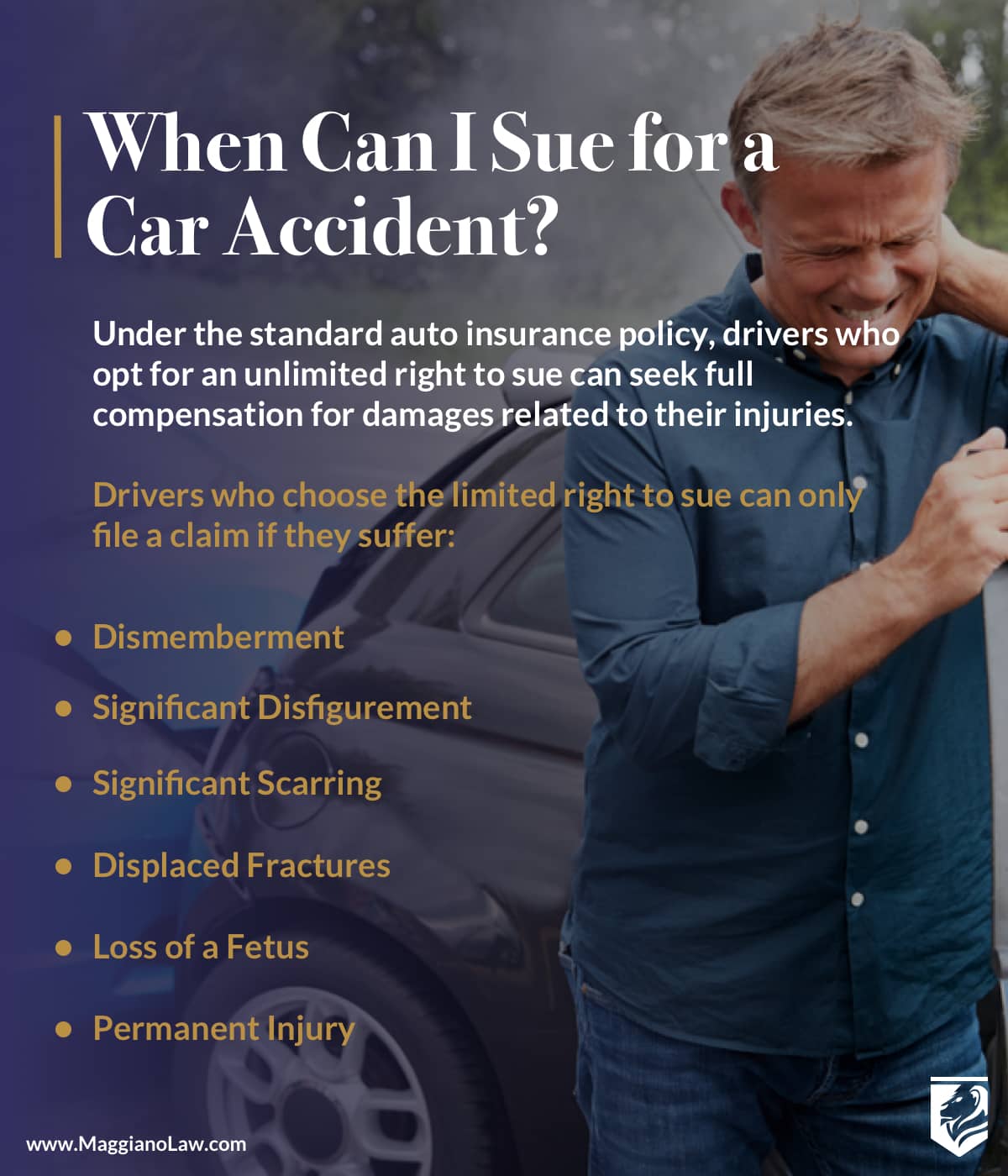
Image Source: www.maggianolaw.com
The Reality of Uninsured Drivers
Car accidents can be devastating, and the aftermath can become even more complicated when the person who caused the crash is uninsured. This is a common problem, and it leaves many accident victims wondering about their options for getting the money they need for medical bills, property damage, and lost wages. Fortunately, the legal system provides avenues for recourse even when the at-fault party is uninsured. Pursuing a car accident lawsuit against an uninsured driver is a recognized legal recourse.
Why Car Insurance is Crucial
Car insurance isn’t just a formality; it’s a vital safety net designed to protect everyone on the road. It ensures that if an accident occurs, there are funds available to cover the damages caused. This concept is rooted in the principle of financial responsibility. When a driver chooses not to carry insurance, they are failing to uphold this responsibility.
Suing an Uninsured Driver: Your Legal Recourse
When you’ve been involved in an accident with a driver who has no insurance, the process of seeking compensation can be more challenging but is by no means impossible. The core of your claim will be to hold the at-fault driver accountable for the harm they have caused. This often leads to civil litigation.
How to File a Lawsuit
If you’re considering suing an uninsured driver, it’s essential to follow the correct legal procedures.
Gathering Evidence
The foundation of any successful lawsuit is strong evidence. After an accident, it’s crucial to collect as much information as possible.
- Police Report: This is often the most critical piece of evidence, documenting the accident, identifying the parties involved, and sometimes indicating fault.
- Witness Information: Get names and contact details of anyone who saw the accident.
- Photos and Videos: Document the scene, vehicle damage, and any injuries sustained.
- Medical Records: Keep detailed records of all medical treatment and expenses.
- Financial Records: Track lost wages and other financial losses.
Filing the Lawsuit
You will typically file a car accident lawsuit in civil court. This involves formally presenting your case against the uninsured driver.
- Complaint: This document outlines the facts of the accident, explains why the other driver is at fault, and details the damages you are seeking.
- Service of Process: The uninsured driver must be formally notified of the lawsuit.
Legal Consequences for the Uninsured Driver
Beyond the civil lawsuit, an at-fault driver found operating a vehicle without insurance faces significant legal consequences.
- Fines: Most jurisdictions impose hefty fines for driving without insurance.
- License Suspension: A driver’s license can be suspended or revoked.
- Vehicle Impoundment: The vehicle involved in the accident may be impounded.
- Jail Time: In some serious cases, jail time is a possibility.
Pursuing Compensation Without Insurance
When the at-fault driver lacks insurance, you’ll need to explore alternative ways to recover your losses. This is where a good lawyer can be invaluable.
Your Own Insurance Policy
One of the most common and effective ways to get compensation when the at-fault driver is uninsured is by using your own uninsured motorist coverage.
Uninsured Motorist (UM) Coverage
This type of coverage is specifically designed to protect you if you are involved in an accident with a driver who has no insurance.
- What it Covers: UM coverage can help pay for medical expenses, lost wages, and other damages that the uninsured driver would have been responsible for.
- How it Works: You would file a claim with your own insurance company, just as you would if the other driver had insurance.
- Stacking: In some states, you can “stack” your UM coverage, meaning you can add the coverage limits of multiple vehicles on your policy to increase the total amount of protection.
Underinsured Motorist (UIM) Coverage
This coverage is similar to UM coverage but applies when the at-fault driver has insurance, but their policy limits are not high enough to cover all your damages.
- When it Applies: If the at-fault driver has insurance, but their coverage is less than the total cost of your injuries and losses, UIM coverage can step in to cover the difference.
Direct Lawsuit Against the At-Fault Driver
Even if the uninsured driver has no insurance, they are still personally liable for the damages they caused. This means their personal assets could be at risk.
Assessing the Driver’s Assets
A key part of suing an uninsured driver involves determining if they have any assets that can be used to satisfy a judgment. This might include:
- Bank Accounts: Funds held in checking or savings accounts.
- Real Estate: Property owned by the driver.
- Vehicles: Other vehicles owned by the driver.
- Wages: A portion of their income through wage garnishment.
The Challenge of Collecting
It’s important to be realistic: if an uninsured driver has very few assets, collecting compensation from a lawsuit can be extremely difficult. Even if you win your car accident lawsuit, if the driver has nothing to their name, you may not be able to recover the full amount of your damages. This is why having your own UM/UIM coverage is so important.
Other Potential Avenues
In certain circumstances, there might be other avenues to explore for legal recourse.
Hit-and-Run Accidents
If the uninsured driver fled the scene of the accident (a hit-and-run), your UM coverage might still apply. Many policies extend UM coverage to these situations.
Damages Beyond Policy Limits
If the damages from the accident significantly exceed the limits of your own insurance policies, and the at-fault uninsured driver has no assets, recovering the full amount can be a significant challenge.
The Importance of Legal Representation
Navigating a car accident lawsuit, especially against an uninsured driver, can be incredibly complex. An experienced attorney can provide invaluable assistance.
What a Lawyer Can Do for You
- Investigate Thoroughly: A lawyer will meticulously gather evidence and build a strong case.
- Handle Communication: They will deal with insurance companies and the opposing party, protecting you from potentially damaging interactions.
- Negotiate Settlements: They can negotiate with your insurance company for a fair settlement under your UM/UIM coverage.
- Represent You in Court: If a settlement cannot be reached, they will represent you in civil litigation to fight for the compensation you deserve.
- Identify All Potential Sources of Recovery: They can help explore all possible avenues for compensation, including looking into the uninsured driver’s assets and any other potentially liable parties.
Choosing the Right Attorney
When seeking legal counsel for a car accident claim, look for an attorney with specific experience in personal injury law and handling cases involving uninsured motorists.
Common Scenarios and Considerations
Let’s look at some common situations you might encounter and how they play out when dealing with an uninsured driver.
Scenario 1: You are hit by an uninsured driver.
- Your recourse: You can sue the at-fault driver directly. You can also file a claim under your own uninsured motorist coverage. Your attorney will guide you on the best strategy.
Scenario 2: You are hit by an insured driver, but they have minimal insurance.
- Your recourse: If their policy limits are insufficient to cover your damages, you can sue the driver directly. You can also file a claim under your underinsured motorist coverage.
Scenario 3: You are involved in a hit-and-run accident.
- Your recourse: If the driver cannot be identified, you may still be able to use your uninsured motorist coverage. The specifics depend on your policy and state laws.
Table: Key Differences in Claims Process
| Feature | Claim Against Insured Driver | Claim Against Uninsured Driver (Direct Lawsuit) | Claim Under Your UM/UIM Coverage |
|---|---|---|---|
| Primary Payer | At-fault driver’s insurance company | At-fault driver (personal assets) | Your own insurance company |
| Process Complexity | Generally straightforward, involving their insurance adjuster | Can be complex, requiring asset investigation and legal action | Similar to a standard claim, but with your own insurer |
| Likelihood of Recovery | High, provided sufficient policy limits | Varies greatly based on the driver’s assets | High, up to your policy limits |
| Need for Lawyer | Recommended, especially for serious injuries or disputes | Highly recommended due to complexity and potential collection issues | Recommended, to ensure fair settlement from your insurer |
| Potential for Lawsuit | Yes, if settlement fails or policy limits are inadequate | Yes, to establish liability and seek damages | Less common to need a lawsuit against your own insurer, but possible |
FAQs About Suing Uninsured Drivers
Q: What if the uninsured driver has no assets? Can I still sue them?
A: Yes, you can still sue them to establish their liability and the extent of your damages. However, collecting compensation becomes problematic if they have no means to pay. A judgment against them may remain on their record, but enforcing it can be challenging. This is why utilizing your own uninsured motorist coverage is often the most practical solution.
Q: How long do I have to sue an uninsured driver?
A: The time limit for filing a car accident lawsuit is determined by the statute of limitations in your state, which varies. It’s crucial to consult with a legal professional as soon as possible to ensure you don’t miss this deadline.
Q: What kind of damages can I claim?
A: You can typically claim economic damages (medical bills, lost wages, property damage) and non-economic damages (pain and suffering, emotional distress). The specific types of recoverable damages can depend on state law.
Q: Is it worth suing someone with no insurance?
A: It depends on the circumstances. If the driver has no assets, winning a lawsuit might not result in actual compensation. However, if they have assets or if you have UM/UIM coverage, pursuing the claim is often worthwhile. An attorney can help you assess the potential for recovery.
Q: What is the difference between uninsured and underinsured motorist coverage?
A: Uninsured motorist (UM) coverage protects you when the at-fault driver has no insurance. Underinsured motorist (UIM) coverage protects you when the at-fault driver has insurance, but their policy limits are not high enough to cover all your damages.
Q: Can I sue the uninsured driver’s family members?
A: Generally, you can only sue the individual who was directly responsible for the accident. Suing family members is usually only possible if they were also negligent or if their assets are legally tied to the at-fault driver (e.g., joint ownership of property), which is rare and highly dependent on specific legal circumstances and state laws.
In conclusion, while facing an uninsured driver in a car accident presents challenges, your right to seek compensation remains. By understanding your legal recourse, exploring options like your own uninsured motorist coverage, and potentially pursuing civil litigation against the at-fault driver, you can work towards recovering the damages you are owed and holding the irresponsible party accountable for their failure to maintain financial responsibility. Always consult with a qualified attorney to discuss your specific situation and the best course of action.