
Does your car make a clicking noise? A clicking sound can mean many things. It might be a loose object, a failing part, or something simple. You can often fix it yourself or with a mechanic’s help.
A clicking sound from your vehicle can be unsettling. It’s a common auto clicking sound that many drivers experience. This noise can occur at different times and in different situations, leading to a variety of causes. Let’s explore the most frequent reasons why your car might be making a clicking noise and what you can do about it.
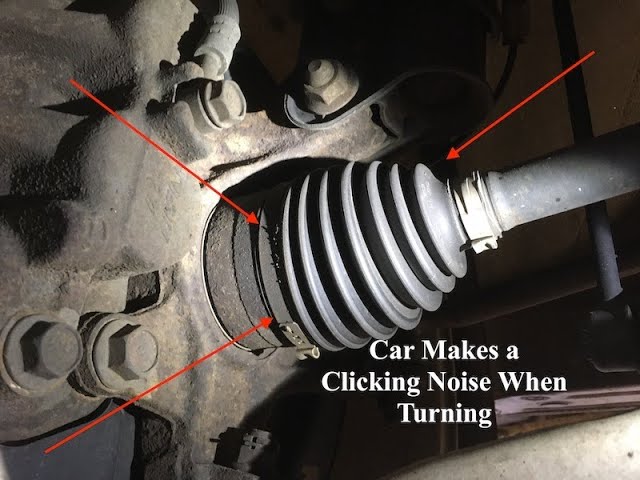
Image Source: i.ytimg.com
Deciphering the Clicking Sound: Where and When?
The location and timing of the clicking noise are crucial clues to its origin. Paying close attention to when the sound occurs can help you and your mechanic pinpoint the problem.
Clicking Noise When Turning
This is a very common complaint. If you hear a clicking noise when turning your steering wheel, especially at lower speeds or when making sharp turns, it often points to issues with the CV joints (Constant Velocity joints).
CV Joints: The Likely Culprits
CV joints are part of your car’s drivetrain, connecting the transmission to the wheels. They allow the wheels to turn and receive power simultaneously. They are protected by rubber boots that keep grease in and dirt out.
- How they fail: When the protective boot tears, grease leaks out, and dirt gets in. This contaminates the joint, causing it to wear down and eventually make that tell-tale clicking sound. The clicking typically gets louder and more frequent with sharper turns.
- Symptoms:
- Clicking or popping noise when turning left or right.
- The noise is usually more pronounced when accelerating through a turn.
- Grease splatters around the CV joint area.
- Fixes: Replacing the CV joint is usually the only effective fix. This is a job best left to a qualified mechanic, as it involves disassembling parts of the suspension and drivetrain.
Other Possibilities for Clicking When Turning
While CV joints are the most common cause, other issues can lead to a clicking noise when turning:
- Wheel Bearings: Though more often associated with a humming or grinding sound, a severely damaged wheel bearing can sometimes produce clicking.
- Ball Joints: These connect the suspension components. If they are worn, they can create clicking or clunking sounds, especially when turning or going over bumps.
- Tie Rod Ends: These are part of the steering system. Worn tie rod ends can also contribute to clicking or looseness in steering.
- Loose Lug Nuts: This is a less common but critical issue. Loose lug nuts can cause a clicking or rattling sound as the wheel wobbles slightly. Always ensure your lug nuts are properly tightened after a tire change.
Car Clicking When Starting or Car Clicking on Startup
If you hear a clicking noise when you try to start your car, it’s a different set of potential problems. This often indicates an issue with the electrical system or the starter.
The Starter Motor: A Common Source
When you turn the key, the starter motor engages with the engine’s flywheel to crank it over. If the starter is failing or not getting enough power, you’ll hear clicking.
- What happens: The starter motor has a solenoid that engages the starter gear. If the solenoid is faulty or the starter motor itself is weak, it might click but not turn the engine over.
- Symptoms:
- A single, loud click when you turn the key.
- A rapid clicking sound (like a machine gun).
- The engine cranks slowly or not at all.
- Causes for starter clicking:
- Low Battery Voltage: A weak or dead battery might not have enough power to turn the starter motor. The clicking you hear is the solenoid trying to engage.
- Corroded or Loose Battery Terminals: Poor electrical connections prevent adequate power flow from the battery to the starter.
- Faulty Starter Solenoid: This small but crucial component can fail, preventing the starter motor from engaging.
- Worn Starter Motor: The motor itself might be worn out and unable to crank the engine.
- Bad Ignition Switch: The switch that sends the signal to the starter could be faulty.
- Simple Fixes (DIY potential):
- Check Battery Terminals: Ensure they are clean and tight. You can clean them with a wire brush and a mixture of baking soda and water.
- Jump Start: If you suspect a low battery, try jump-starting your car. If it starts, the battery is likely the issue.
- Test Battery: Have your battery tested at an auto parts store.
Other Clicking Noises During Startup
- Fuel Pump Relay: Sometimes, a clicking sound might be heard from the fuse box as the fuel pump relay engages. This is normal. However, if it’s a persistent or unusual clicking, it could indicate a problem with the fuel system.
- Ignition System: While less common for clicking, issues with spark plugs or ignition coils could theoretically create odd noises, but typically not a distinct click on startup.
Car Making Clicking Sound When Accelerating
When the clicking noise happens specifically when you accelerate, it often points to issues within the drivetrain, particularly those that are under load when power is applied.
Drivetrain Components Under Load
- CV Joints (Again!): Even if you didn’t notice clicking when turning, a worn CV joint can also make noise when accelerating, especially if the wear is significant. The torque applied during acceleration puts more stress on the joint.
- U-Joints (Universal Joints): These are found on rear-wheel-drive and all-wheel-drive vehicles. They connect driveshafts. Worn U-joints can produce a clunking or clicking sound when accelerating or shifting gears.
- Symptoms: Clicking or clunking as you accelerate from a stop or when the transmission engages.
- Fixes: U-joints are replaceable parts.
- Differential Issues: The differential allows your wheels to turn at different speeds during turns. Internal wear or low fluid levels can sometimes cause clicking sounds under acceleration.
- Exhaust System: A loose exhaust component, like a heat shield or hanger, might vibrate and create a clicking or rattling noise when the engine vibrates more during acceleration.
Clicking Under the Hood
A clicking noise originating from under the hood can be due to a wider range of issues, from simple to complex.
Common Causes of Clicking Under the Hood
- Serpentine Belt Tensioner or Pulleys: The serpentine belt drives many accessories like the alternator, power steering pump, and AC compressor. A failing tensioner or a worn pulley bearing can create a clicking or chirping sound, especially when the engine is running.
- Symptoms: Clicking, chirping, or squealing from the front of the engine. The sound might change with engine RPM.
- Fixes: Replacing the faulty tensioner or pulley.
- Accessory Components: The components driven by the serpentine belt can themselves have issues:
- Alternator: A failing alternator bearing can click.
- Power Steering Pump: A worn pump can make noises.
- AC Compressor: Issues with the AC compressor clutch can cause clicking.
- Vacuum Leaks: In some cases, a significant vacuum leak can cause unusual engine noises, though clicking is less common than hissing.
- Engine Valves (Less Likely for Simple Clicking): While valve train issues (like lifters or rockers) can cause ticking, it’s usually a more rhythmic, metallic tick rather than a general click. However, severe wear could manifest as a click.
- Loose Engine Cover or Components: Sometimes, a simple loose plastic cover or bracket can vibrate and create a clicking sound.
Intermittent Clicking Noise Car
An intermittent clicking noise car owners experience is often the most frustrating. This can happen for various reasons, where a part is only making noise when it’s at a specific temperature, vibration level, or load.
What Makes a Click Intermittent?
- Heat Expansion/Contraction: Metal parts expand and contract with temperature changes. A slightly loose component might only click when it’s at operating temperature or has just cooled down.
- Vibration Resonance: Certain speeds or engine vibrations might cause a loose part to resonate and click, while at other speeds, it’s quiet.
- Load Variation: As mentioned, issues with CV joints or drivetrain components might only be apparent when the engine is under load (accelerating).
- Electrical Switches/Relays: Some electrical relays can click normally when activated, but an intermittent fault could cause them to click at random times.
Diagnosing Car Clicking Problems
To effectively diagnose car clicking, you need to gather as much information as possible.
Step-by-Step Diagnostic Approach
- Note the Conditions:
- When does it happen? (Starting, turning, accelerating, braking, idling, constant)
- What speed? (Low speed, high speed, any speed)
- What steering input? (Left turn, right turn, straight)
- What engine state? (Cold engine, warm engine)
- What gear? (Park, Drive, Reverse)
- Listen Carefully:
- Where is the sound coming from? (Front, rear, left, right, under the hood, under the car)
- What is the character of the click? (Fast, slow, loud, faint, metallic, plastic)
- Visual Inspection:
- Check tires and wheels: Look for anything stuck in the tread, loose lug nuts, or damage to the hubcaps.
- Inspect suspension and drivetrain: Look for torn CV boots, leaking grease, loose components, or damaged exhaust parts.
- Check under the hood: Look for loose belts, vibrating covers, or anything obviously out of place.
- Check battery terminals: Ensure they are clean and secure.
- Test Drive (with caution):
- If the noise is safe to replicate, try to reproduce the conditions under which it occurs. If it’s clicking when turning, try gentle turns and then sharper ones. If it’s during acceleration, start from a stop.
Tools to Help Diagnose Car Clicking
- Mechanic’s Stethoscope: This tool can help you pinpoint the source of a noise by amplifying it. You can place the probe on various engine or suspension components.
- Jack and Jack Stands: For safe inspection of wheels and undercarriage components. Never work under a car supported only by a jack.
- Basic Hand Tools: Wrenches, sockets, screwdrivers, and pliers can help tighten loose components or remove covers for inspection.
Common Causes of Car Clicking and Their Fixes
Let’s consolidate the most common causes of car clicking and their general fixes.
| Symptom | Likely Cause(s) | Common Fix | DIY Difficulty |
|---|---|---|---|
| Clicking when turning | Worn CV Joints | Replace CV axle shaft(s) | High |
| Loose wheel bearings | Replace wheel bearing | High | |
| Worn ball joints / Tie rod ends | Replace ball joint / Tie rod end | Medium-High | |
| Loose lug nuts | Tighten lug nuts | Low | |
| Clicking on startup | Low battery voltage | Charge or replace battery, clean terminals | Low |
| Faulty starter motor / solenoid | Replace starter motor / solenoid | High | |
| Corroded battery terminals | Clean battery terminals | Low | |
| Clicking when accelerating | Worn CV Joints | Replace CV axle shaft(s) | High |
| Worn U-Joints (RWD/AWD) | Replace U-joint(s) | Medium-High | |
| Loose exhaust components | Secure or replace loose exhaust hangers/shields | Low-Medium | |
| Clicking under the hood | Serpentine belt tensioner / pulley bearing | Replace tensioner or pulley | Medium |
| Failing accessory component (alternator, etc.) | Replace the faulty accessory | Medium-High | |
| Loose plastic covers / brackets | Tighten or secure loose components | Low | |
| Intermittent clicking noise | Varies greatly based on specific condition | Depends heavily on the exact cause; often requires detailed diagnosis | Varies |
When to Call a Professional
While some minor issues can be addressed with DIY effort, many clicking noises indicate wear or damage to critical components that require specialized tools and expertise.
- When it involves the drivetrain: CV joints, U-joints, and differential issues are complex and affect your car’s ability to move safely.
- When it involves steering and suspension: Ball joints, tie rod ends, and wheel bearings are vital for safe handling and steering.
- When it involves the starter or electrical system: Working with electrical systems can be dangerous if you’re not experienced.
- If you’re unsure: It’s always better to be safe. A professional mechanic can accurately diagnose car clicking and perform the necessary repairs. Ignoring a clicking noise can lead to more significant damage and potentially dangerous situations.
Frequently Asked Questions (FAQ)
Q1: Can a clicking noise from my car be dangerous?
A1: Yes, depending on the cause. Clicking noises related to steering, suspension, or drivetrain components can compromise your car’s handling and safety. It’s best to have them checked.
Q2: Is it normal for my car to click on startup?
A2: A single, soft click as the fuel pump primes or a brief whirring sound from the starter is usually normal. However, a loud, repetitive, or hesitant clicking when trying to start the engine is not normal and indicates a problem.
Q3: How much does it cost to fix a clicking noise?
A3: The cost varies widely. A simple fix like tightening lug nuts is free. Replacing a CV joint can range from a few hundred dollars per axle. Starter replacement can also be several hundred dollars. A mechanic can provide an accurate estimate after diagnosing the car noise clicking problem.
Q4: My car makes a clicking noise, but only when it’s cold. What could that be?
A4: This often points to something that changes with temperature. It could be slightly loose exhaust components, or perhaps a suspension part that tightens up when cold. CV joints can sometimes be more noticeable when cold as well.
Q5: Can my tires cause a clicking noise?
A5: While unlikely to be a consistent “click,” objects stuck in the tire tread (like a nail or stone) can sometimes cause a rhythmic clicking as the wheel rotates. Also, a loose wheel cover or hubcap can produce clicking sounds.
Q6: What if the clicking noise is very faint?
A6: A faint clicking noise can still be an early warning sign of a problem. It’s best to investigate it before it becomes louder and potentially more damaging.
Q7: I have an intermittent clicking noise car, and it disappears sometimes. Should I still worry?
A7: Absolutely. Intermittent noises can be tricky to diagnose but are often indicators of developing issues. They can sometimes be related to temperature changes or specific driving conditions. It’s worth investigating to prevent future problems.
Dealing with car noises can be a hassle, but by paying attention to the details of when and where the auto clicking sound occurs, you can significantly help in diagnosing the issue. Whether it’s a clicking noise when turning, car clicking when starting, or car making clicking sound when accelerating, each sound provides a clue. Regular maintenance and prompt attention to unusual noises are key to keeping your vehicle running smoothly and safely. If you’re ever in doubt about a car clicking on startup or any other strange auto clicking sound, it’s always best to consult a trusted mechanic to get your car noise clicking problem resolved.