
Yes, you absolutely can get car insurance after a car accident. Many people worry that a collision will make them uninsurable, but that’s generally not the case, though the process and cost might change. This guide will walk you through how to navigate the world of post-accident insurance and ensure you’re covered.
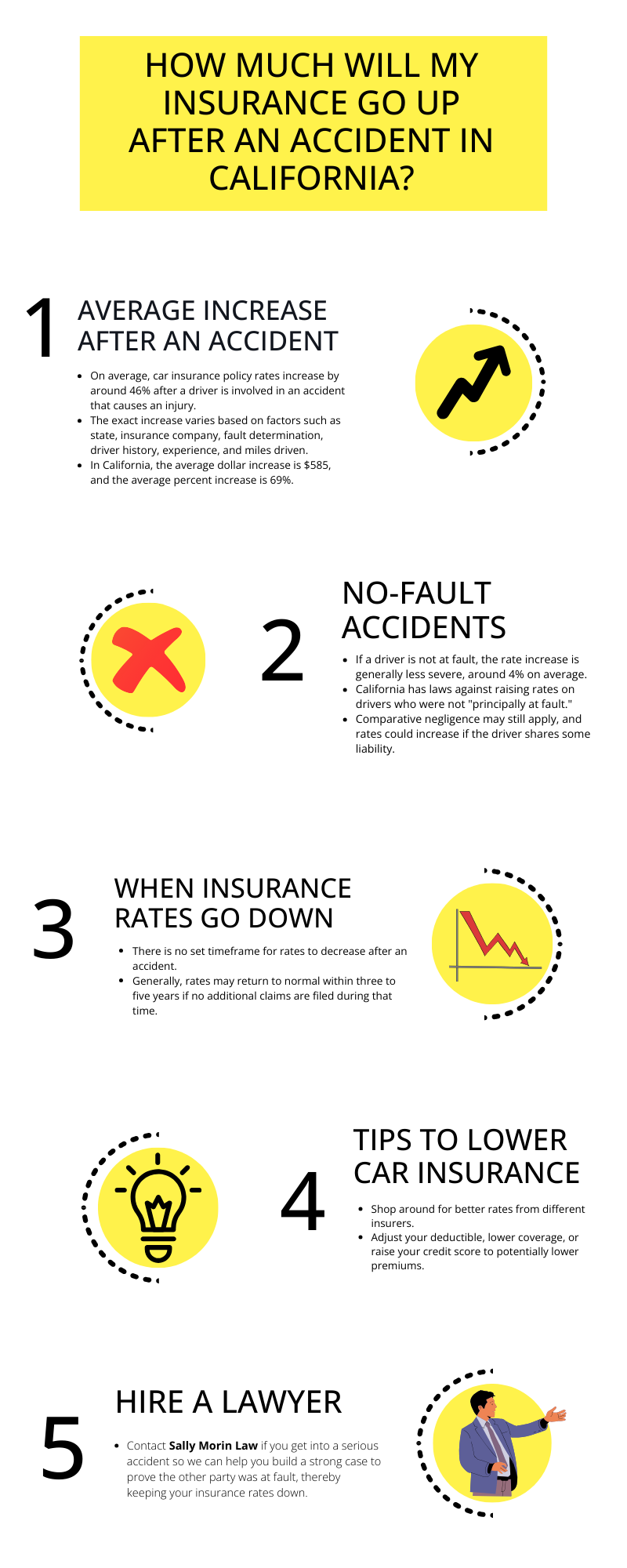
Image Source: www.sallymorinlaw.com
Getting Back on the Road: Your Insurance Options Post-Accident
Life happens, and sometimes that includes a fender bender or a more significant collision. The aftermath of a car accident can feel overwhelming, and one of the first questions that pops into many people’s minds is, “What about my car insurance?” The good news is that having an accident doesn’t automatically mean you’re blacklisted from the insurance market. You can still secure coverage, but how you go about it and what you’ll pay can be influenced by the accident itself.
This article aims to demystify the process of obtaining car insurance post-accident. We’ll cover everything from understanding how an accident affects your rates to finding new policies and insuring a damaged vehicle.
The Impact of an Accident on Your Insurance
When you’re involved in a car accident, especially one where you’re found at fault, your insurance company will likely review your driving record. This review is standard procedure when you’re filing an insurance claim after an accident.
Here’s how an accident typically impacts your insurance:
- Premium Increases: This is the most common consequence. If the accident was your fault, or if you have multiple at-fault accidents or claims, your insurance premiums will likely go up. The amount of the increase varies based on your insurer, your location, the severity of the accident, and your driving history.
- Loss of Discounts: Some insurers offer “safe driver” discounts. An at-fault accident could cause you to lose these discounts, further increasing your costs.
- Cancellation or Non-Renewal: While less common, insurers can cancel your policy or choose not to renew it after an accident, particularly if it’s a severe accident, you have a history of accidents, or your policy has specific clauses. This is more likely if the accident highlights a pattern of risky driving.
- Higher Deductible: If you file a claim for damage to your own car, you’ll have to pay your deductible. If you plan to file another claim soon, you might consider if the deductible amount is still manageable.
Can You Get Car Insurance After a Collision?
Absolutely. The primary reason you have car insurance is precisely for situations like a collision. Your insurer is there to help cover the costs associated with the accident, whether it’s damage to your vehicle, another person’s vehicle, or medical expenses.
However, the type of insurance you can get and the cost might be affected. Let’s break down the scenarios:
Scenario 1: You Have Existing Insurance and Need to File a Claim
If you have an active car insurance policy when the accident occurs, you will typically file a claim with your current provider. This is the standard car insurance after collision process. You’ll report the accident to your insurer, and they will guide you through the steps. This usually involves:
- Reporting the Accident: You’ll need to provide details about the accident, including the date, time, location, other parties involved, and a description of what happened.
- Investigation: Your insurer will investigate the claim. This might involve speaking with you, the other driver, witnesses, and reviewing police reports.
- Damage Assessment: They will assess the damage to your vehicle and any other vehicles or property involved. This might require an inspection by an insurance adjuster.
- Settlement: Based on the investigation and damage assessment, your insurer will determine fault and decide how much to pay for damages and repairs. You will pay your deductible for repairs to your own car.
Scenario 2: You Don’t Have Insurance and Need Coverage After the Accident
This is where things can get a bit more challenging, but it’s still possible to get covered. If you were driving without insurance at the time of the accident, you’ll have to pay for all damages out-of-pocket. However, you can and should get insurance immediately afterward.
- Insuring a Damaged Vehicle: If your car is damaged and you need insurance to legally drive it or to repair it, you can still purchase a policy. Most insurance companies will ask about recent accidents during the application process. If you disclose the accident, they will factor it into your premium.
- Potential for Higher Premiums: Because you were uninsured during the accident (or if you’ve recently had an accident), new policies you apply for will likely come with higher premiums. Insurers see this as increased risk.
- Shopping Around is Crucial: When you’re looking for new car insurance post-accident, it’s vital to shop around. Different companies have different underwriting guidelines and pricing strategies. What one company might consider a deal-breaker, another might accept with a higher premium.
Scenario 3: Your Insurance Was Canceled or Not Renewed After an Accident
If your previous insurer canceled your policy or chose not to renew it due to an accident, you’ll need to find a new insurance company. This situation requires careful shopping.
- High-Risk Insurers: You may need to look into companies that specialize in insuring drivers with less-than-perfect records. These are often referred to as “non-standard” insurance providers.
- SR-22 Requirements: In some states, if your license was suspended due to an accident (e.g., for not having insurance), you might be required to file an SR-22 form. This form is a certification from your insurance company that you have the minimum required liability coverage. It signals to the state that you are a compliant driver. Getting an SR-22 usually means higher premiums.
Buying Insurance After a Fender Bender
A fender bender, while potentially costly, is often less impactful on your insurance than a severe collision. The key here is how you handle the situation.
- Assess the Damage: If the damage is minor and the cost of repair is close to your deductible, you might consider paying for the repairs out-of-pocket. This way, you avoid filing an insurance claim after an accident that could trigger a premium increase.
- Talk to Your Insurer: Even for a fender bender, it’s wise to discuss the incident with your insurance agent. They can advise you on whether filing a claim is the best course of action based on the damage amount, your deductible, and the potential impact on your rates.
- No-Fault Accidents: If the accident was not your fault, and the other driver’s insurance accepts liability, your rates are less likely to increase. However, sometimes insurers will still make adjustments.
Insuring a Damaged Vehicle
If your car sustained damage in an accident, you have a few options for getting it insured.
- Repair First, Then Insure: If the vehicle is drivable but has cosmetic damage, you can get it repaired and then apply for insurance.
- Insure a Damaged Vehicle: You can get insurance on a damaged vehicle. However, your policy will likely exclude coverage for the pre-existing damage from the accident. This means if you get a new policy and then have another accident, the new insurance will cover damages from the new accident, not the old one.
- Comprehensive and Collision Coverage: If you want your own insurance to cover the damage from the accident, you need to have comprehensive and collision coverage on your policy before the accident occurs. If you buy a policy after the accident, this pre-existing damage won’t be covered by the new policy.
Car Insurance Renewal After Accident
When your car insurance renewal after accident comes up, expect a review of your policy and potentially a rate adjustment.
- Review Your Policy: Before your renewal date, carefully review the renewal offer. Compare it to your previous policy and rates from other companies.
- Shop Around: This is the best time to shop around. If your current insurer significantly raised your rates after the accident, you might find a better deal with a different company.
- Provide Updated Information: Ensure all information on your renewal policy is accurate. If your driving record has improved since the accident (e.g., you’ve gone a year without further incidents), this might help mitigate rate increases.
New Car Insurance Post-Accident: What to Expect
If you need new car insurance post-accident, whether because your old policy was canceled or you’re simply looking for a better rate, here’s what the process typically looks like:
The Application Process
When you apply for new car insurance, you’ll be asked a series of questions to assess your risk. These typically include:
- Driving History: This is the most crucial part. Insurers will ask about your driving record, including any accidents (at-fault and not-at-fault), speeding tickets, DUIs, and other violations. They will likely pull your Motor Vehicle Report (MVR) from your state’s Department of Motor Vehicles.
- Accident Details: Be prepared to provide details about any recent accidents, including dates, the nature of the accident, and whether claims were filed. Honesty is vital here. Failing to disclose an accident can lead to your policy being canceled or claims being denied.
- Vehicle Information: Details about the car you want to insure (make, model, year, VIN, safety features).
- Usage Information: How you use the car (e.g., commuting, business, pleasure), estimated annual mileage.
- Coverage Needs: What types of coverage you want (liability, comprehensive, collision, uninsured/underinsured motorist, etc.).
Factors Influencing Your New Premium
Several factors will influence the premium you’re offered for getting auto insurance after wreck:
| Factor | How it Affects Your Premium |
|---|---|
| At-Fault Accidents | Significantly increases premiums. The more at-fault accidents, the higher the cost. |
| Not-At-Fault Accidents | Generally has a less significant impact than at-fault accidents, but some insurers may still adjust rates. |
| Claim Frequency | Filing multiple claims in a short period, even if not at-fault, can lead to higher premiums. |
| Severity of Accident | Accidents involving serious injuries or extensive property damage will likely result in higher premium increases. |
| Driving Record | A clean driving record otherwise can help offset the impact of a single accident. A history of violations and accidents will be more costly. |
| Type of Vehicle | Sports cars or vehicles prone to theft may have higher premiums than safer, family-oriented vehicles. |
| Your Location | Rates vary by state and even by ZIP code due to local accident frequency, crime rates, and insurance regulations. |
| Coverage Levels Chosen | Higher coverage limits and optional coverages (like roadside assistance or rental car reimbursement) will increase your premium. |
| Deductible Amount | Choosing a higher deductible for comprehensive and collision coverage will lower your premium, but you’ll pay more out-of-pocket if you file a claim. |
| Credit-Based Insurance Score | In many states, insurers use a credit-based insurance score to help predict risk. A lower score can lead to higher premiums. (Not used in all states). |
| Age and Gender | Younger, less experienced drivers typically pay more. Gender can also play a role in some states. |
Strategies for Getting Cheaper Insurance After an Accident
Even with an accident on your record, there are ways to make your car insurance eligibility after crash more affordable:
- Shop Around Aggressively: This is your most powerful tool. Get quotes from at least 5-10 different insurance companies. Compare not just the price, but also the coverage details.
- Ask About Discounts: Inquire about every discount available. This could include:
- Good student discount (if applicable)
- Multi-policy discount (bundling home and auto)
- Multi-car discount
- Safe driver discount (though you might have to wait a period after the accident to qualify again)
- Defensive driving course discount
- Vehicle safety features discount
- Low mileage discount
- Consider Raising Your Deductible: If you can afford to pay more out-of-pocket in the event of a future claim, raising your comprehensive and collision deductibles can lower your monthly premium.
- Re-evaluate Coverage: While you need adequate coverage, review if you’re over-insured on certain aspects. For older, lower-value cars, you might consider dropping collision and comprehensive coverage altogether, especially if the repair cost could exceed the car’s actual cash value.
- Improve Your Driving: Focus on maintaining a clean driving record moving forward. Avoid tickets and at-fault accidents. After a few years of claim-free driving, your rates will likely decrease.
- Pay Your Premium Annually or Semi-Annually: Some insurers offer a discount for paying your premium in full rather than in monthly installments.
Dealing with Specific Accident Scenarios
What if the Accident Wasn’t Your Fault?
If the accident was not your fault, you generally won’t see your own insurance rates increase significantly if you don’t file a claim with your insurer. Instead, you would file a claim against the at-fault driver’s insurance policy.
- Filing with the Other Driver’s Insurer: This process can sometimes be slower and more complicated than dealing with your own insurance. You’ll need to prove the other driver was at fault.
- Impact on Future Rates: Even if you don’t file a claim with your own insurer, some companies may still record the accident and the fact that you were involved, potentially leading to a small rate adjustment at renewal. However, this is less common for not-at-fault incidents.
- Uninsured/Underinsured Motorist Coverage: This is where your own “uninsured/underinsured motorist” (UM/UIM) coverage comes into play if the at-fault driver has no insurance or insufficient insurance.
What if You Were Uninsured?
Driving without insurance is illegal in most places and can lead to severe penalties. If you were uninsured at the time of the accident:
- Personal Liability: You will be personally responsible for all damages and injuries you caused. This can include repair costs, medical bills, lost wages, and pain and suffering for the other parties involved.
- Legal Penalties: You may face fines, license suspension, and even jail time, depending on your state’s laws.
- Getting Insured Immediately: As mentioned earlier, you can and should get insurance immediately after such an incident. This will protect you going forward, but it won’t cover the costs of the accident that already occurred. Be prepared for higher premiums due to being uninsured.
Frequently Asked Questions (FAQ)
Q1: Will my insurance rates always go up after an accident?
A: Not always. If the accident was not your fault, your rates are less likely to increase. Even if it was your fault, some insurers offer a “first accident forgiveness” program, especially if you have a long history of safe driving.
Q2: How long does an accident stay on my insurance record?
A: Most insurance companies consider accidents for 3 to 5 years, though some may look back further for significant violations. The impact on your rates typically lessens over time.
Q3: Can I get insurance if my license was suspended because of the accident?
A: Yes, but you will likely need to obtain an SR-22 form (or equivalent) to prove you have insurance. This is a requirement in many states and typically leads to higher premiums. You’ll also need to address the reason for your license suspension.
Q4: What if I was at fault but only had liability insurance?
A: Liability insurance covers damage to others and their property. If you were at fault, your liability coverage would pay for the other party’s damages. Your own vehicle’s repairs would not be covered unless you have collision coverage.
Q5: Is it better to pay for minor damage out-of-pocket or file a claim?
A: If the damage is minor and the repair cost is close to or less than your deductible, paying out-of-pocket is often the better choice to avoid a potential rate increase. Your insurance agent can help you decide.
Q6: What is the process for getting car insurance after a wreck?
A: The process is similar to getting insurance at any other time, but you must be honest about recent accidents. You’ll fill out an application, and the insurer will review your driving record and the accident details to determine your eligibility and premium.
Q7: Can I insure a damaged vehicle I just bought?
A: You can insure a damaged vehicle, but the policy will likely exclude coverage for the pre-existing damage. You would need to purchase coverage that includes comprehensive and collision before an accident occurs for it to cover your car’s damage.
Conclusion
Having a car accident can be a stressful experience, but it doesn’t have to spell the end of your ability to get affordable car insurance. While a collision might lead to increased premiums or require you to seek out different insurance providers, options are available. By understanding how accidents affect your insurance, being honest on applications, shopping around diligently, and taking advantage of available discounts, you can successfully navigate car insurance eligibility after crash and keep yourself covered on the road. Remember, maintaining a good driving record moving forward is the best strategy for long-term affordability.