
Yes, you can have a gun in your car in California, but there are strict rules you must follow regarding how it’s stored, transported, and who can access it. California gun laws are some of the most complex in the nation, and violating them can lead to serious legal consequences, including hefty fines and imprisonment. This guide will help you navigate the intricate landscape of firearm possession in your vehicle within the Golden State.
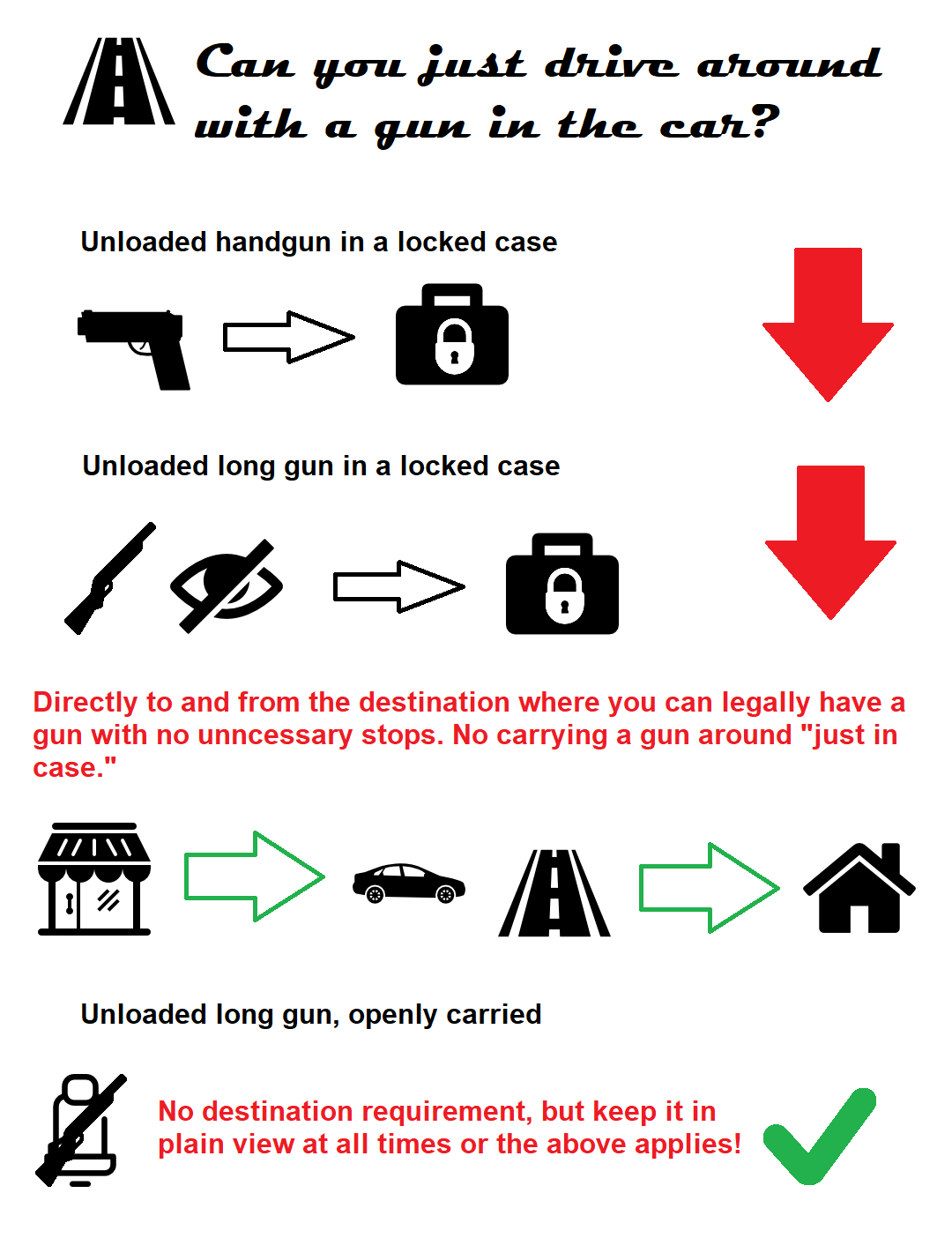
Image Source: www.californiacarry.org
Fathoming California’s Firearm Transportation Rules
California takes a particularly cautious approach to firearm transportation. The primary goal is to prevent unauthorized access and accidental discharge. Simply placing a firearm in your glove compartment or under your seat is often not legal. The law dictates specific requirements for how firearms, both handguns and long guns, must be secured.
Transporting Long Guns in California
Transporting long guns (rifles and shotguns) in California generally requires them to be unloaded and either in a locked container or in the trunk of your vehicle.
Key Requirements for Long Guns:
- Unloaded: The firearm must not be loaded with ammunition in the chamber or magazine.
- Locked Container: This can be a locked gun case, a locked rifle or shotgun case, or a locked container designed to carry firearms.
- Trunk: If not in a locked container, the long gun must be in the trunk of your vehicle. For vehicles without a trunk (like SUVs or pickup trucks), it must be in a locked container.
Exceptions for Long Guns:
There are some limited exceptions, for instance, if you are transporting a firearm for a lawful hunting or sporting purpose and are going directly to or from a range or hunting ground, and the firearm is unloaded.
Transporting Handguns in California
Transporting handguns in California is significantly more restrictive. Generally, you must have a valid Firearm Safety Certificate (FSC) and a California Handgun Permit (CHP), which is often referred to as a “carry concealed weapon” (CCW) permit, though the legal terminology is a bit nuanced when it comes to transport. However, there are specific exemptions.
Exemptions for Handgun Transport:
The most common exemption allows individuals to transport unloaded handguns in a locked container, out of reach of the shooter, and not readily accessible to the person. This typically means in the trunk of your car.
- Unloaded: The handgun must be unloaded.
- Locked Container: The handgun must be in a locked container.
- Not Readily Accessible: The container must not be readily accessible to any occupant of the vehicle. For most vehicles, this means the trunk. If the vehicle does not have a trunk, it must be in a locked container and not in the passenger compartment.
- No Ammunition: Ammunition must be stored separately from the handgun, also not readily accessible.
Who Cannot Transport Handguns?
Certain individuals are prohibited from possessing firearms, including handguns, in their vehicles. This includes individuals with prior felony convictions, those subject to domestic violence restraining orders, and those who have been deemed mentally unfit to possess firearms.
California Loaded Firearm Laws in Vehicles
California has very strict laws against having a loaded firearm in a vehicle. It is illegal for any person to have in possession, custody, or control any loaded firearm on their person or within any vehicle while upon any public street, public sidewalk, public place, or public park.
What Constitutes a “Loaded” Firearm?
A firearm is considered loaded if:
- There is a cartridge in the chamber.
- There is a cartridge in the cylinder (for revolvers).
- There is a cartridge in the magazine and the magazine is inserted into the firearm.
Even if the magazine is not inserted, but the ammunition is readily accessible to the firearm (e.g., in the same locked container or immediately next to the firearm), it can be problematic depending on the specific circumstances and interpretation of the law.
Concealed Carry California and Vehicle Laws
California is a “may issue” state for concealed carry permits. This means that obtaining a CCW permit is discretionary for law enforcement agencies. Even with a CCW permit, there are specific rules about carrying a concealed firearm in a vehicle.
CCW Permit Holders in Vehicles:
If you have a valid CCW permit, you may generally carry a concealed handgun in your vehicle. However, the permit specifies the locations where you are authorized to carry. It’s crucial to be aware of any restrictions on your permit, such as carrying in schools or other prohibited areas, which may still apply even within your vehicle.
- Unloaded vs. Loaded: With a CCW, you can typically carry a loaded concealed handgun. However, the firearm must still be kept out of sight and not readily accessible to unauthorized persons.
- Passenger Access: You must ensure that no passengers who are prohibited from possessing firearms can access your concealed firearm.
Open Carry California and Vehicle Laws
Open carry of handguns is generally prohibited in California, with very few exceptions. Open carry of long guns is also restricted. Therefore, having a handgun in plain view in your vehicle is almost certainly illegal. Long guns, if carried openly in a vehicle, must typically be unloaded and may require specific permits depending on the circumstances.
Key Points on Open Carry in Vehicles:
- Handguns: Open carry of handguns in vehicles is illegal.
- Long Guns: Open carry of long guns is generally prohibited, but there can be exceptions for specific purposes like hunting. However, they must be unloaded and transported according to the rules for long guns.
Navigating Specific Scenarios and Exemptions
California law tries to account for various situations where individuals might need to transport firearms. However, these exemptions are narrowly defined.
Legal Gun Ownership in California
To legally possess a firearm in California, you must meet certain criteria. This includes being of legal age, not being a prohibited person (felon, domestic abuser, etc.), and potentially having passed a firearms safety test and obtained an FSC.
Requirements for Legal Firearm Possession:
- Age: 21 years or older for most firearms.
- Background Checks: All firearm purchases require a background check.
- Firearm Safety Certificate (FSC): Generally required for purchasing firearms.
- Prohibited Persons: Individuals convicted of certain crimes, those with restraining orders, or those with specific mental health adjudications are prohibited from possessing firearms.
Ammunition in Vehicles
Ammunition also has its own set of regulations. When transporting firearms, ammunition must be stored separately from the firearm and in a way that it is not readily accessible.
Ammunition Storage Guidelines:
- Unloaded Firearm: If the firearm is unloaded, ammunition should ideally be in a separate locked container.
- Readily Accessible: The key is “readily accessible.” Keeping ammunition in the same locked container as an unloaded firearm might be permissible if the firearm is secured and the ammunition is also secured, but separate. However, the safest approach is to keep them completely separated.
Storing Firearms in Your Car
Proper storage is paramount to complying with California vehicle gun laws.
Secure Storage Practices:
- Locked Container: Always use a locked container specifically designed for firearms. This could be a portable gun lock box or a built-in vehicle safe.
- Trunk: The trunk is the safest place for firearms that are not being carried under a CCW permit.
- Out of Sight: Ensure firearms are not visible from outside the vehicle.
Transporting Firearms to and From Ranges or Competitions
California law provides some leniency for transporting firearms to and from licensed shooting ranges or for participation in organized shooting competitions.
Range/Competition Transport Rules:
- Unloaded: The firearm must be unloaded.
- Locked Container: The firearm must be in a locked container.
- Direct Route: You must be traveling directly to or from the range or competition venue.
- No Stops: Generally, you cannot make significant stops along the way.
What About Rental Cars?
The rules for firearms in rental cars are the same as for privately owned vehicles. You must comply with all California vehicle gun laws, including using a locked container and ensuring the firearm is unloaded.
Penalties for Violating California’s Vehicle Gun Laws
The penalties for violating California’s firearm transportation laws can be severe. These laws are strictly enforced.
Common Violations and Consequences:
- Possessing a Loaded Firearm: This is a misdemeanor offense, punishable by up to one year in county jail and/or a fine of up to $1,000.
- Improperly Stored/Transported Firearm: Transporting a firearm without using a locked container or in an accessible part of the vehicle can lead to charges ranging from infractions to misdemeanors, depending on the specifics.
- Possession by Prohibited Persons: If a prohibited person is found with a firearm in their vehicle, the penalties are significantly harsher, often including felony charges.
Frequently Asked Questions (FAQ)
Q1: Can I carry a loaded handgun in my car in California without a CCW?
No, it is illegal to carry a loaded handgun in your car in California without a valid concealed carry permit (CCW). The handgun must be unloaded and in a locked container, separate from ammunition, and not readily accessible to any occupant.
Q2: Do I need a Firearm Safety Certificate (FSC) to transport a handgun in my car in California?
While you may not need an FSC specifically for transport if the handgun is unloaded and properly secured, you do need an FSC to purchase a handgun. If you are found to be in possession of a handgun that you are not legally allowed to possess, the FSC or lack thereof can be a factor. The primary requirement for transport is that the handgun is unloaded and in a locked container.
Q3: What is considered a “locked container” in California for firearms?
A locked container can be a gun case with a built-in lock, a separate lockable container, or a vehicle’s trunk. The container must be securely locked. Handgun cases that are locked with a key or combination lock are generally acceptable.
Q4: Can I keep a firearm in my glove compartment in California?
Generally, no. The glove compartment is considered readily accessible to the driver and occupants, so it is not a legal place to store a loaded firearm. Even an unloaded firearm must be in a locked container, and the glove compartment is typically not considered a locked container in the eyes of the law unless it has a separate key lock mechanism.
Q5: What are the rules for transporting a rifle or shotgun in my car in California?
Rifles and shotguns must be unloaded and either in a locked container or in the trunk of your vehicle. For vehicles without a trunk, they must be in a locked container and out of reach of the occupants.
Q6: Can I transport a firearm if I am under 21?
You must be 21 years of age to possess a handgun in California, with very limited exceptions (e.g., military personnel on duty). For long guns, the age is generally 18, but they must still be transported legally.
Q7: Is it legal to have ammunition in the same locked container as an unloaded handgun in California?
While not explicitly forbidden in all scenarios if both are secured, it is strongly advised to keep ammunition separate from the firearm in a different locked container or in a location that is not readily accessible. The goal is to prevent immediate re-loading.
Q8: What if I have a CCW and my permit is restricted to certain locations?
If your CCW permit has restrictions (e.g., prohibiting carry in schools or on federal property), those restrictions still apply when you are carrying a firearm in your vehicle. Always be aware of the terms of your specific permit.
Conclusion
Navigating the legalities of firearm possession in a vehicle in California requires meticulous attention to detail. California’s stringent firearm laws are designed to enhance public safety, and compliance is crucial. Always ensure your firearms are unloaded, properly secured in locked containers, and stored in a manner that prevents unauthorized access. If you plan to carry a concealed firearm, obtaining a CCW permit is necessary, and you must abide by all its conditions. Ignorance of the law is not a defense, and violations can carry severe penalties. Consulting with a legal professional specializing in California gun laws is always recommended if you have specific questions or complex situations.